
A great haircut can transform your appearance without requiring a dramatic change in length. The Burst Fade is a popular choice for men who want clean sides, a distinctive shape around the ears, and plenty of freedom to style the top. Whether you prefer a textured crop, curly mohawk, modern mullet, or classic short cut, this fade can complement many different looks.
However, choosing the right variation depends on your hair texture, face shape, lifestyle, and maintenance preferences. This complete guide explores 15 stylish burst fade haircuts, explains their differences, and shares practical advice for choosing, styling, and maintaining your ideal look.
What Is a Burst Fade Haircut and How Does It Work?
A burst fade haircut features a curved, semicircular fade that spreads outward around the ear. The hair gradually becomes shorter toward the edges, creating a clean transition while leaving more length above the ear and often toward the back. Unlike a traditional fade that typically follows a more horizontal path around the head, this technique creates a rounded shape that follows the ear’s natural outline.
Barbers can customize the fade to suit different hairstyles, from short crops to longer mullets and mohawks. Some versions blend the hair down to the skin, while others preserve a little length for a softer finish. The result depends on the fade height, the amount of contrast, and how the sides connect with the top and back.
One reason the modern burst fade haircut remains versatile is that it works with many textures and lengths. Curly hair creates natural volume, straight hair produces a sharper silhouette, and coily hair can form a striking high-top shape. You can also combine the fade with a beard, a shaved design, or a longer fringe.
A burst fade is not a complete hairstyle by itself. It is a fading technique that shapes the sides and back. Your chosen top style determines whether the finished haircut looks classic, sporty, edgy, or relaxed.
What Are the 15 Best Burst Fade Haircuts for Men?
The best burst fade hairstyles for men combine a well-shaped fade with a top style that suits your hair and personal taste. Some emphasize texture and movement, while others rely on clean lines and dramatic contrast. These 15 options offer different looks, from understated everyday cuts to bold hairstyles that stand out.
1. Classic Burst Fade
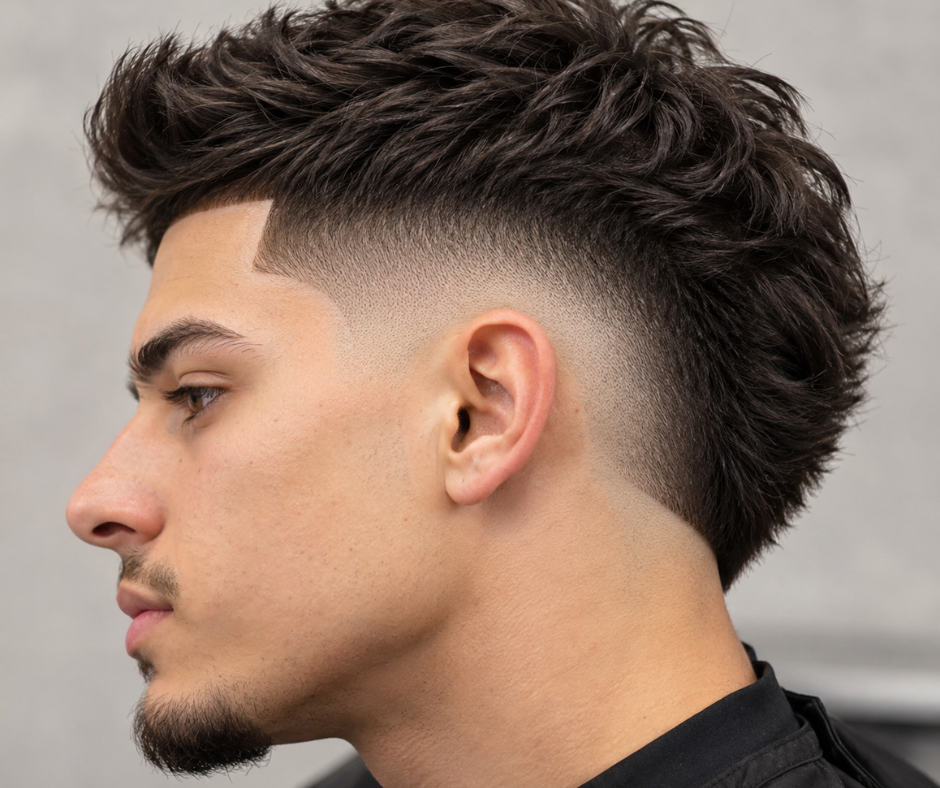
The classic burst fade features a balanced curve around the ears and a neatly blended transition into the top. It works well with short textured hair, a simple side-swept style, or a slightly longer top. Because it avoids excessive height and dramatic contrast, this option suits men who want a modern haircut without an overly bold appearance.
Ask your barber to keep the curve symmetrical and blend the fade smoothly into your existing hair length. You can wear the top naturally, add a small amount of matte clay, or use a light styling cream for a softer finish. Regular trims will help preserve the curved outline.
2. Low Burst Fade
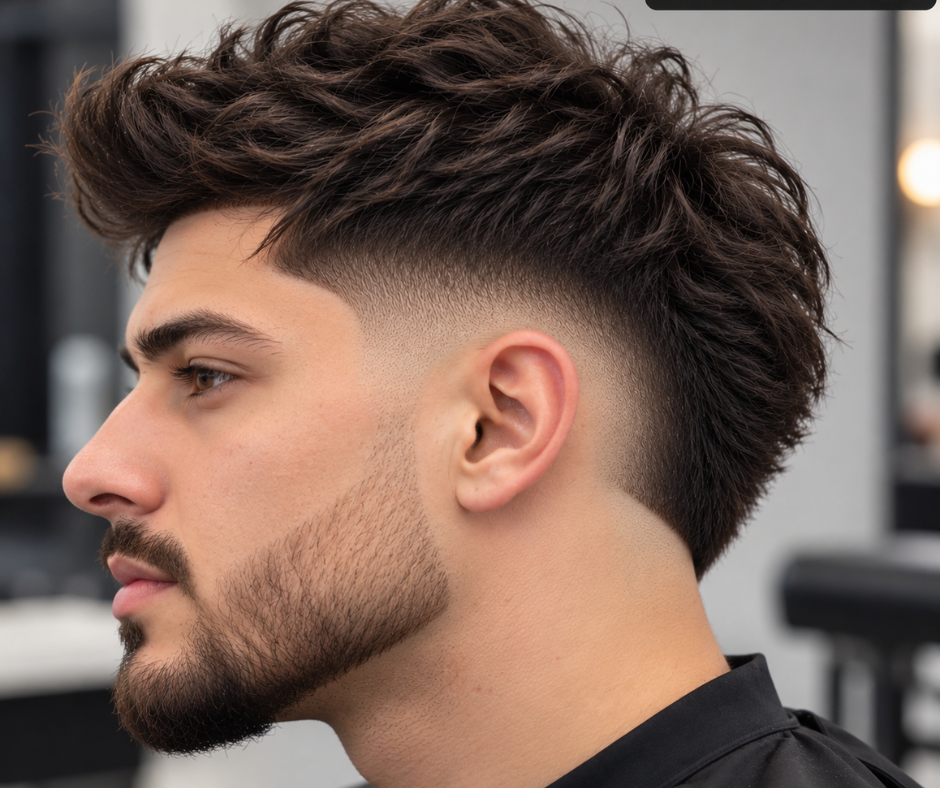
A low burst fade keeps the faded area closer to the ears and lower sides of the head. This creates a subtle transition that leaves more hair around the upper sides, making it suitable for men who prefer understated contrast. It pairs especially well with short curls, a textured top, and classic everyday hairstyles.
This variation can also be a practical choice if you want a fashionable haircut that does not look excessively dramatic. Tell your barber to keep the fade low and avoid removing too much weight above the ears. That instruction helps maintain a softer silhouette while preserving the distinctive curved shape.
3. Mid Burst Fade
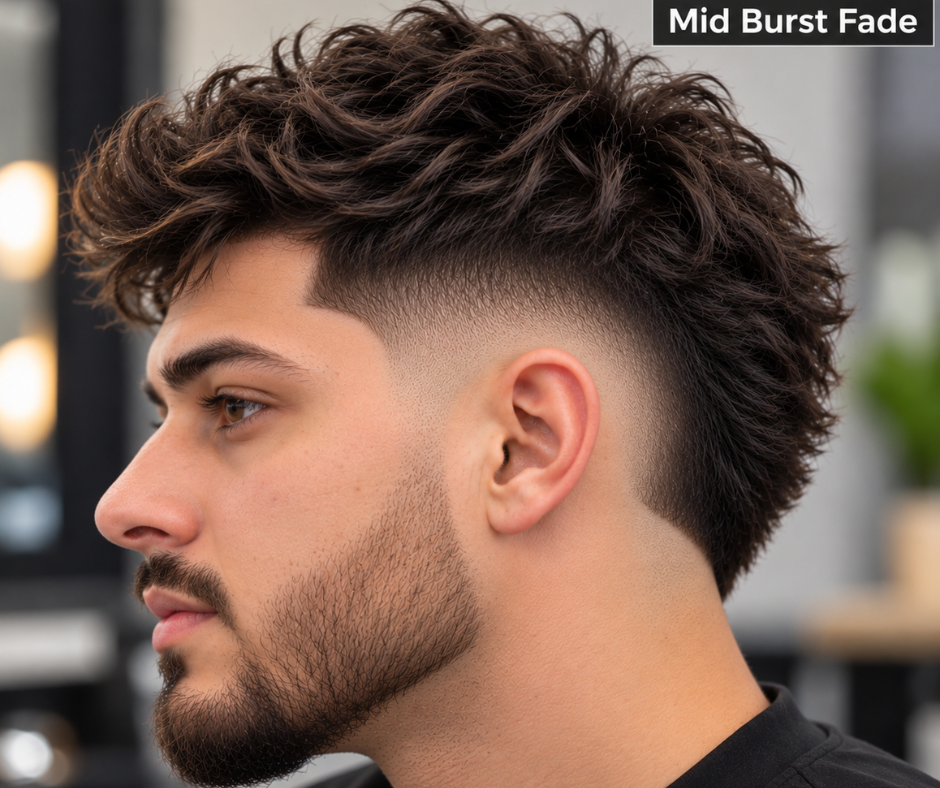
A mid burst fade sits between the lower and higher versions, creating a noticeable but balanced contrast. It leaves enough length around the upper sides for a natural transition while emphasizing the rounded fade near the ears. This makes it a flexible option for men who want a contemporary haircut without an extreme finish.
You can combine a mid burst fade with a textured crop, short curls, a quiff, or a compact mohawk. It is particularly useful when you want the sides to look clean while keeping the top easy to style. Your barber can adjust the curve and blending to suit your head shape and hair density.
4. High Burst Fade
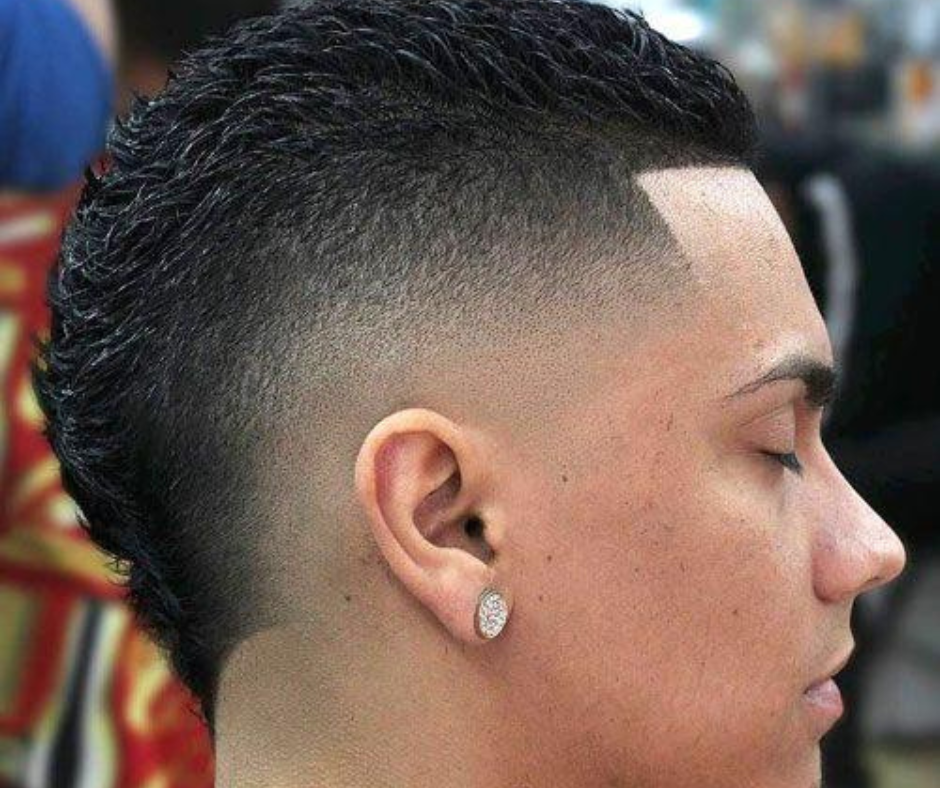
A high burst fade extends the faded area farther up the sides, producing a sharper and more noticeable contrast. It can make the top appear more prominent, especially when paired with curls, a mohawk, or a high-top hairstyle. This option works well for men who prefer bold, sharply defined haircuts.
Because a high fade removes more hair from the sides, it may expose the shape of your head more clearly. Discuss the desired height with your barber before cutting begins. If you are unsure, starting with a mid burst fade can help you determine whether you want a more dramatic result next time.
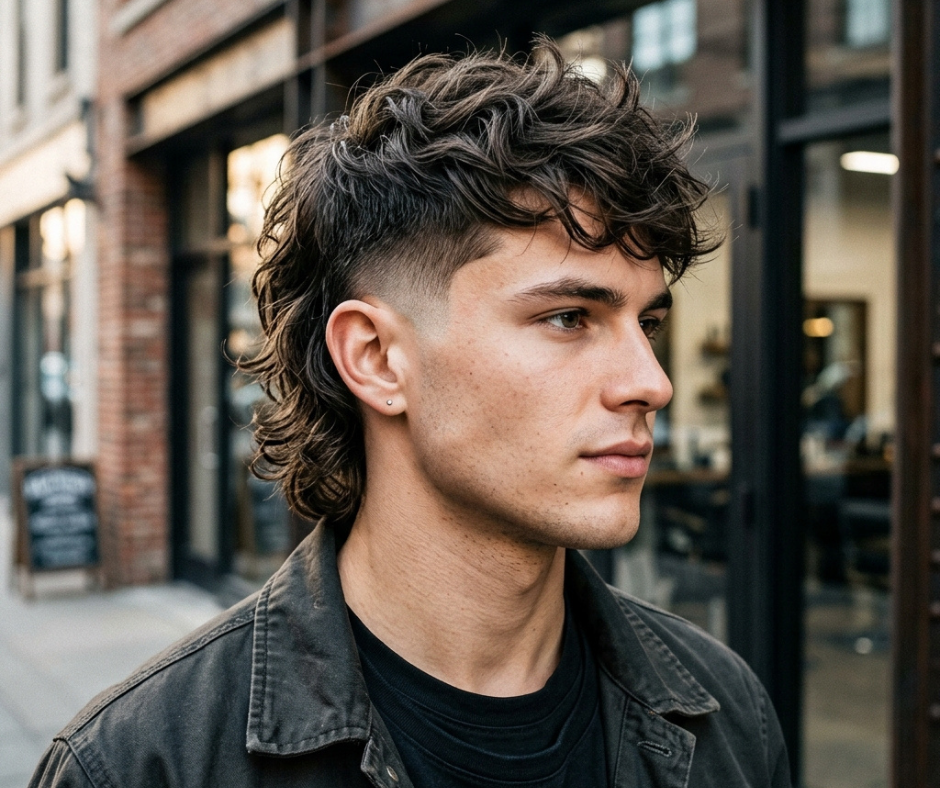
5. Burst Fade Mullet
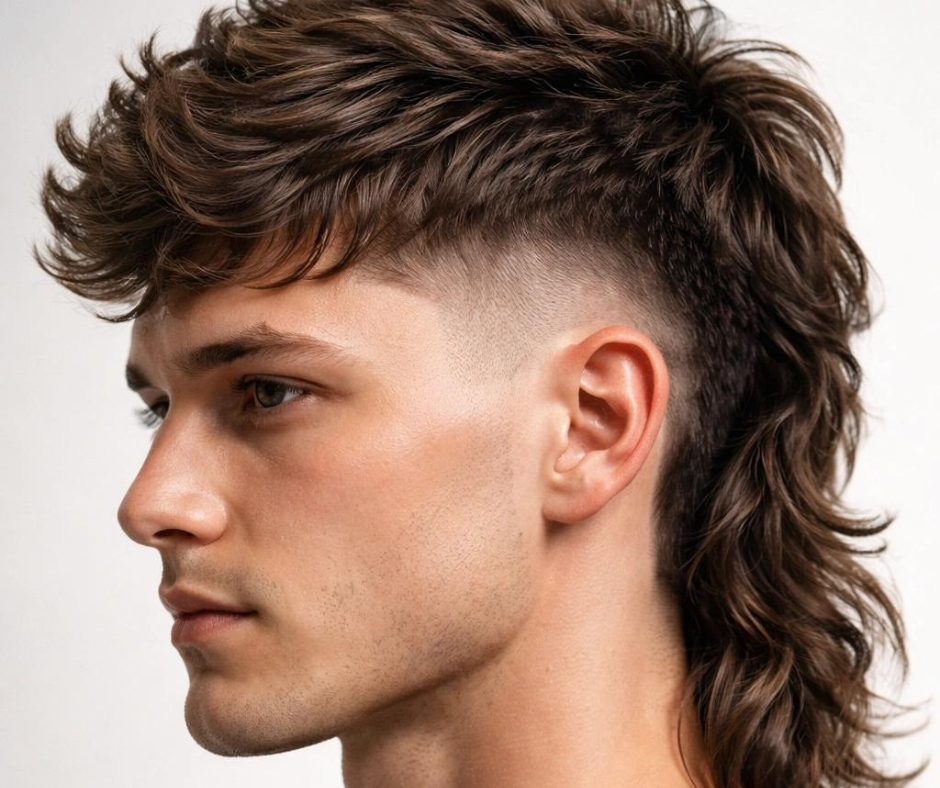
The burst fade mullet combines curved fading around the ears with longer hair at the back. The contrast between the clean sides and extended back creates a distinctive silhouette associated with modern alternative and streetwear styles. The top can remain textured, curly, wavy, or relatively short depending on your preference.
This haircut works particularly well when the back has enough length to establish the mullet shape. However, the transition between the fade and the longer rear section needs careful blending. Ask your barber to preserve the back length while shaping the area around the ears. Regular neck and side touch-ups help keep the haircut intentional rather than overgrown.
6. Burst Fade Mohawk
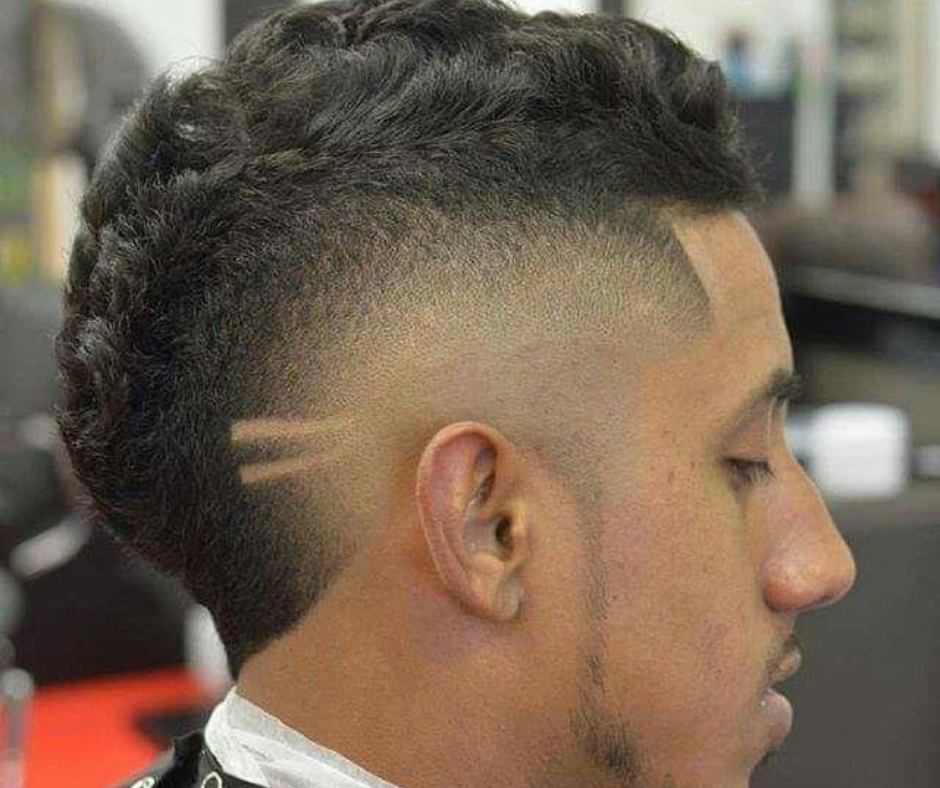
A burst fade mohawk keeps a prominent strip of longer hair running along the center of the head. The curved fade removes bulk around the ears, making the central section stand out more clearly. You can wear the strip short and textured or leave extra length for a taller, more dramatic finish.
This style suits men who enjoy expressive haircuts and do not mind spending some time styling their hair. A small amount of matte clay can add definition, while stronger styling products may help hold taller shapes. If you prefer a more natural look, ask for a softer mohawk rather than a sharply disconnected strip.
7. Burst Fade Faux Hawk
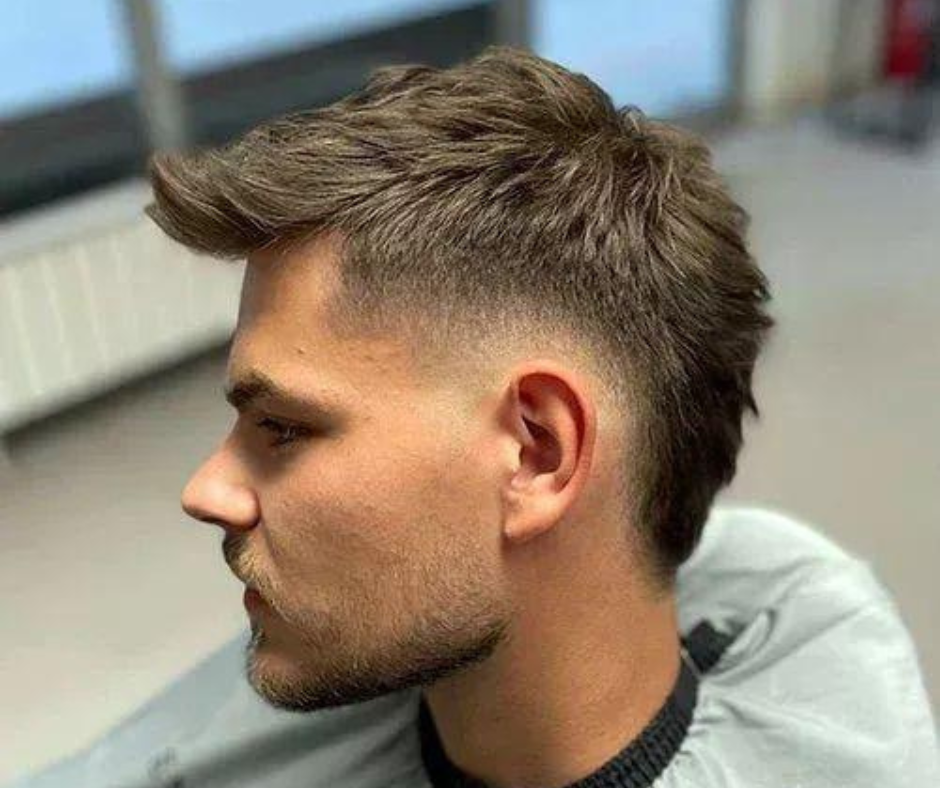
The burst fade faux hawk offers a mohawk-inspired appearance without requiring a strongly defined central strip. The hair is styled upward and inward toward the middle, creating a raised shape with softer edges. Meanwhile, the fade around the ears adds definition without overwhelming the rest of the haircut.
This option works well for straight, wavy, and curly hair when the top has enough length to create movement. Apply a small amount of styling clay and direct the hair toward the center using your fingers. The faux hawk is a good choice if you want something expressive but easier to wear in everyday settings than a dramatic mohawk.
8. Burst Fade Textured Crop
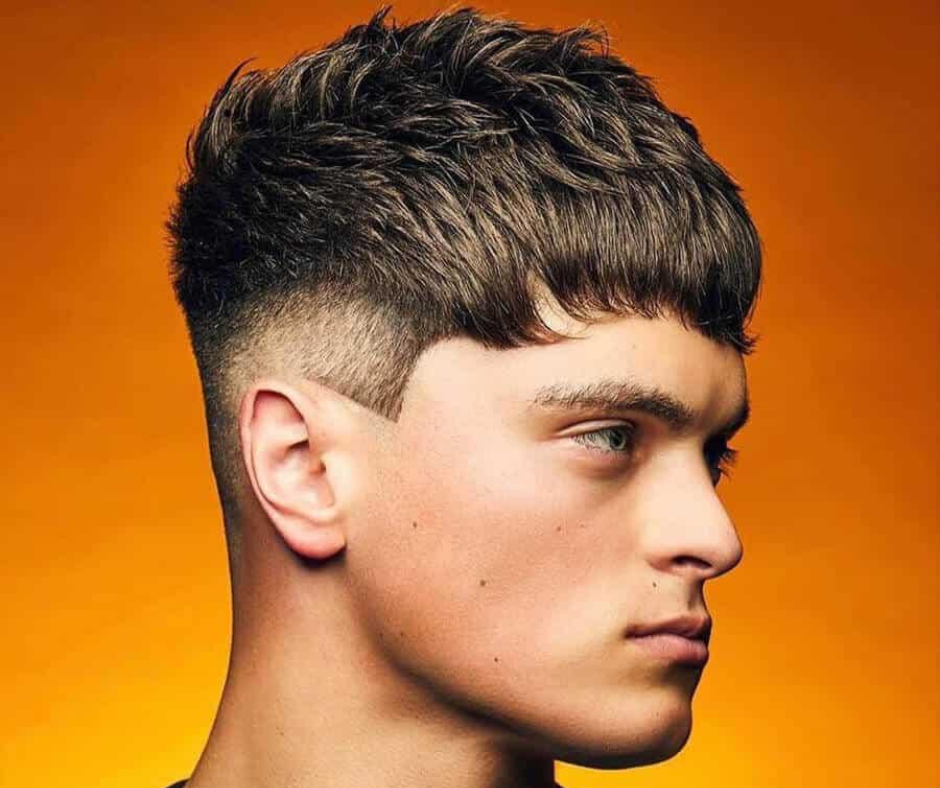
A burst fade textured crop combines short, choppy layers with clean sides and a curved fade around the ears. The top usually features a forward-facing fringe or irregular texture that creates movement without requiring significant length. It is a practical option for men who prefer a modern haircut with relatively simple styling.
For a natural finish, work a small amount of matte paste through dry or slightly damp hair. Avoid using too much product because it can flatten the texture and make the hair look greasy. Ask your barber to maintain enough length at the front for the fringe to sit comfortably without falling into your eyes.
9. Burst Fade French Crop
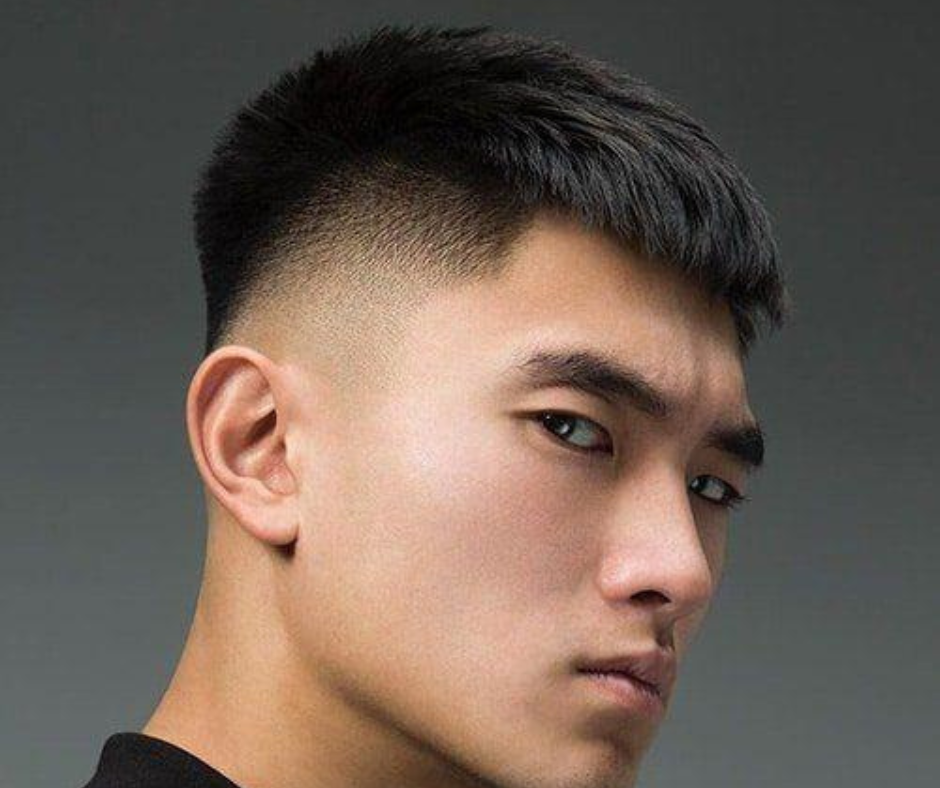
The burst fade French crop features a short top, textured layers, and a defined fringe that usually sits across the forehead. Compared with a textured crop, the French crop often has a more deliberate forward direction and a clearer fringe shape. The burst fade adds a rounded detail to the sides while keeping the haircut compact.
This style is useful if you want a polished appearance without spending much time on daily styling. It can work with straight, wavy, and some curly hair textures, although the fringe may behave differently depending on natural movement. Tell your barber how short you want the fringe and whether you prefer a straight, uneven, or softly textured edge.
10. Burst Fade Pompadour
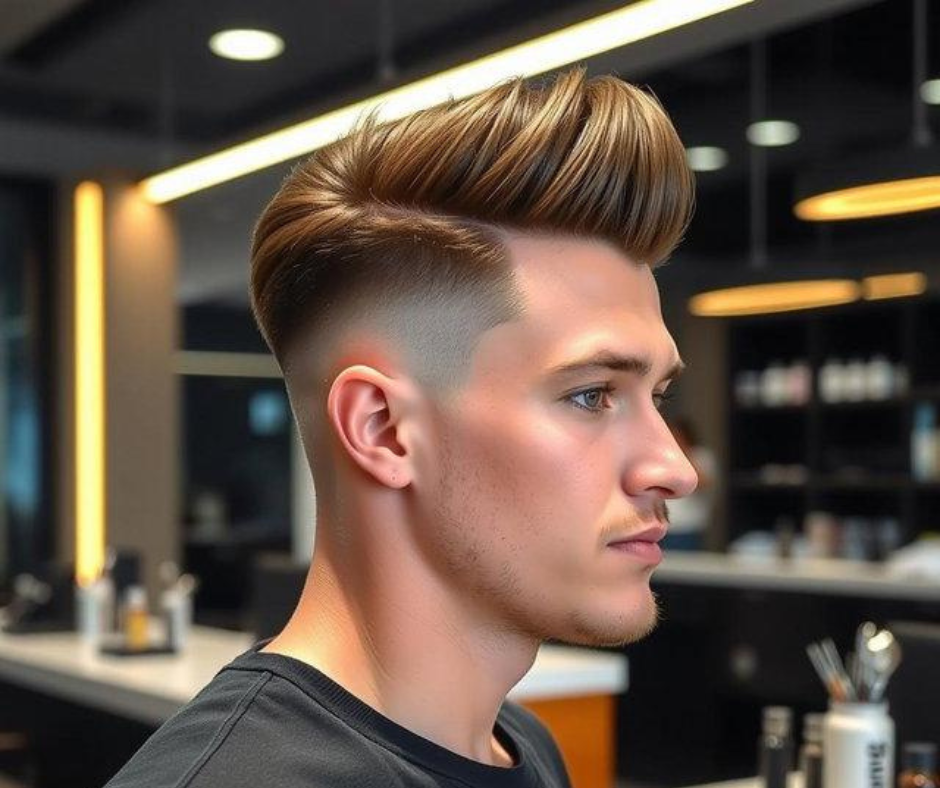
A burst fade pompadour combines volume at the front with hair swept upward and backward. The contrast between the fuller top and curved fade creates a bold silhouette that can look polished or contemporary. It generally works best when you have enough length and density to build the desired volume.
Styling requires more effort than a short crop. Use a blow dryer to lift the front, then apply a suitable pomade or styling cream to control the shape. If your hair is fine, avoid heavy products that pull it down. Ask your barber to leave enough length on top while blending the sides smoothly into the chosen shape.
Which Burst Fade Suits Your Face Shape and Hair Type?
The right burst fade for different face shapes depends on how the haircut balances your proportions. Your face shape is a useful starting point, but hair density, growth patterns, personal style, and the amount of volume you prefer also influence the result. Rather than following rigid rules, choose a cut that creates the silhouette you want.
For a round face, added height on top can create a more elongated appearance. Men with oval faces can usually experiment with a wider range of proportions, including crops, quiffs, and mullets. A square face often pairs well with textured styles that complement its defined jawline, while a longer face may benefit from moderate top height and some fullness at the sides.
| Face shape or hair type | Burst fade styles to consider | Practical tip |
| Round face | Textured crop, faux hawk, short quiff | Add moderate height without excessive side volume. |
| Oval face | Classic fade, mullet, comb over | Experiment with different top lengths and textures. |
| Square face | Textured crop, short mohawk, short top | Use texture to complement strong facial angles. |
| Long face | Low burst fade, French crop, side-swept top | Avoid excessive height if you want balanced proportions. |
| Thick hair | Mohawk, quiff, textured crop | Ask for weight removal where the hair becomes bulky. |
| Thin hair | Buzz cut, short crop, compact quiff | Keep the style controlled and avoid heavy products. |
| Curly or coily hair | Curly burst fade, afro, high top | Preserve the natural curl pattern and desired top volume. |
| Straight hair | Comb over, slick back, French crop | Use suitable products to create texture and direction. |
| Wavy hair | Mullet, textured crop, relaxed quiff | Work with the natural wave rather than forcing it flat. |
Choosing a Burst Fade for Curly, Coily, Straight, and Wavy Hair
A burst fade curly hair style can emphasize natural curls while reducing bulk around the ears. Curly and coily textures often create strong contrast between the top and faded sides, particularly when the top remains relatively full. An afro or high-top variation can produce a similarly striking silhouette when the barber preserves the shape and density you want.
With straight hair, styles such as the French crop, comb over, and slick back provide more directional control. Wavy hair offers a balance between movement and structure, making it suitable for textured crops and relaxed mullets. If your hair is fine or thinning, shorter styles can simplify styling, but the best choice depends on your growth pattern and personal preferences rather than hair type alone.
Burst Fade vs. Drop Fade vs. Taper Fade: Which Is Better?
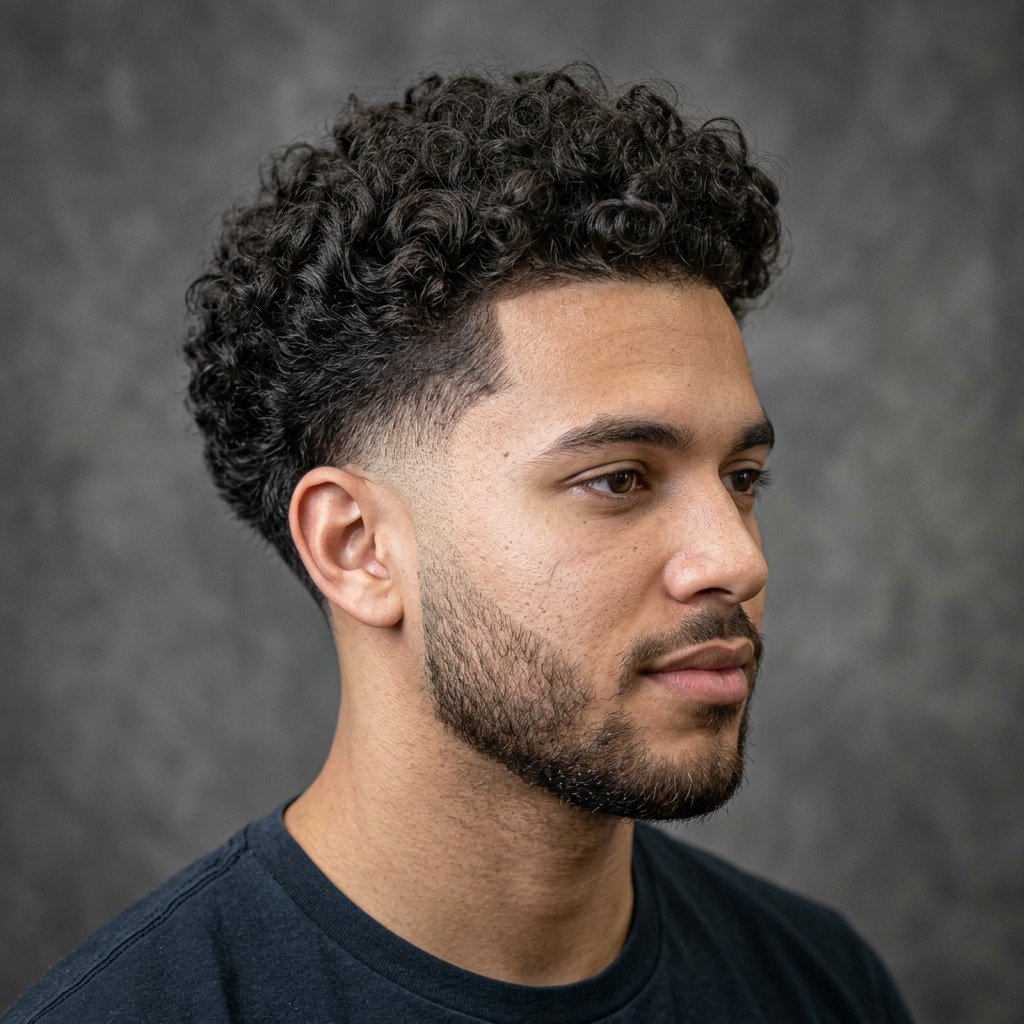
Burst fades, drop fades, and taper fades all create transitions between shorter and longer hair. However, they differ in where the fade sits and how it follows the head. Understanding these differences helps you explain the look you want instead of relying on haircut names alone.
A burst fade curves around the ear, a drop fade descends toward the back of the head, and a taper fade gradually shortens the hair around specific areas such as the temples and neckline. These techniques can sometimes overlap. For example, a barber may combine a burst fade around the ears with a tapered neckline.
| Feature | Burst fade | Drop fade | Taper fade |
| Main shape | Rounded curve around the ears | Curved transition that drops toward the back | Gradual shortening around selected edges |
| Typical focus | Ear area and surrounding sides | Side and rear outline | Temples, sideburns, and neckline |
| Overall effect | Distinctive and rounded | Contoured and often more continuous around the head | Subtle and understated |
| Common pairings | Mohawks, mullets, curls, textured crops | Crops, quiffs, pompadours | Classic cuts, comb overs, short styles |
| Maintenance | Depends on fade height and contrast | Depends on the chosen blend | Often easier to grow out softly |
Burst Fade vs. Drop Fade
The main burst fade vs. drop fade difference is the location and shape of the fade. A burst fade forms a semicircular pattern around the ear, while a drop fade follows a descending curve toward the back of the head. Both can produce a clean, modern finish, but their silhouettes differ.
Choose a burst fade when you want the ear area to become a defining feature, especially with a mohawk or mullet. Consider a drop fade if you prefer a fade that follows the rear contour more continuously. Your barber can help determine which pattern better complements your intended hairstyle.
Burst Fade vs. Taper Fade
A taper fade usually focuses on gradually shortening the hair around the temples, sideburns, or neckline. It often leaves more hair on the sides than a pronounced burst fade, making it a good option for men who prefer a conservative finish.
A burst fade creates a more specific curved shape around the ears and can produce greater contrast. If you want a subtle haircut that grows out naturally, a taper may suit you better. If you want a defined outline around the ears, the burst fade offers a more distinctive alternative.
How Do You Choose the Right Burst Fade Haircut?
Choosing a burst fade haircut starts with deciding how noticeable you want the transition to be. A low fade creates a softer appearance, while a high fade delivers more contrast. A mid fade sits between them and can be a useful starting point if you are unsure which height you prefer.
Next, consider your top length, hair texture, and styling routine. A short crop or buzz cut is generally easier to manage than a pompadour or long mullet. Curly hair may need moisture and curl definition, while straight hair may benefit from a lightweight product that creates texture or hold. Think about how much time you want to spend styling your hair each morning.
Your lifestyle matters too. Some workplaces favor understated cuts, while others welcome more expressive hairstyles. A burst fade does not automatically make a haircut unprofessional. The overall length, contrast, finish, and workplace expectations all matter. If you want flexibility, choose a moderate fade that can look neat without extensive styling.
Before committing, look at reference photos showing hair similar to yours. A haircut that looks impressive on thick, tightly curled hair may produce a different result on fine, straight hair. Discuss those differences with your barber rather than expecting an identical copy.
What Should You Tell Your Barber to Get a Perfect Burst Fade?
Clear barber instructions help you get a burst fade that matches your expectations. Instead of simply asking for a trendy fade, describe the curve around the ears, your preferred fade height, the length on top, and the shape you want at the back. A reference photo can communicate these details more effectively than a haircut name alone.
Start by explaining whether you want a low, mid, or high burst fade. Then discuss whether you prefer a skin fade or a softer transition that leaves some hair visible. Tell your barber how much length to preserve on top and whether the sides should connect smoothly to a mullet, mohawk, crop, or another hairstyle. If you have a beard, mention whether you want its edges blended with the haircut.
A useful barber consultation should cover these details:
- Fade height: Explain how high you want the curved section to rise.
- Fade finish: Choose between a skin-close finish and a softer blend.
- Top length: Specify whether you want short, medium, or longer hair.
- Back shape: Clarify whether you prefer a rounded neckline, V-cut, or longer mullet.
- Ear area: Explain how pronounced you want the semicircular curve.
- Beard and sideburns: Discuss whether the haircut should connect with facial hair.
- Final texture: Describe whether you want a neat, natural, choppy, or highly defined finish.
You can use this simple script when booking your appointment:
I’d like a burst fade around the ears, with a [low, mid, or high] fade. Please keep the top [short, medium, or long] and blend it into the sides. I want the back [natural, rounded, V-shaped, or longer like a mullet]. I’d prefer a [skin-close or softer] finish. Please show me the shape before taking off too much length.
Ask your barber to confirm the plan before removing significant length. If you are trying the style for the first time, a conservative approach gives you room to adjust the height or contrast at your next appointment. This is particularly useful if your hair grows unevenly or your preferred style depends on retaining length at the back.
How to Style, Maintain, and Troubleshoot a Burst Fade
A burst fade haircut maintenance routine should focus on keeping the curved outline clean while allowing the top to retain its intended shape. Your styling method depends on the hairstyle you choose. Short crops may need only a little product, while quiffs, pompadours, and slick backs can require more preparation and control.
Start with clean hair and select a product that suits your texture. Matte clay or paste can add definition to short, textured styles. Curl cream can help manage curls, while lightweight styling cream may provide control for straight or wavy hair. Pomade can create a smoother finish, although the amount you need depends on your hair length and the product’s hold.
For a simple daily routine, follow these steps:
- Wash or refresh your hair as needed, depending on your scalp and styling products.
- Towel-dry gently and detangle curls or waves without pulling excessively.
- Apply a small amount of suitable styling product, adding more only when necessary.
- Shape the top with your fingers, a comb, or a blow dryer, depending on your hairstyle.
- Check the sides and back in a mirror to make sure the overall silhouette still looks balanced.
Best Styling Products for Different Hair Types
The best product depends on the finish you want and how your hair behaves. Matte clay and styling paste provide texture for crops and short, messy styles. Pomade helps control comb overs and slick backs, while curl cream supports definition in naturally curly hair. Lightweight mousse can add lift to some fine or wavy hair types without the heavier feel of certain creams.
You do not need a large collection of products to style a burst fade. Start with one suitable product and learn how much your hair needs. Applying too much can make the top greasy, heavy, or difficult to reshape. If you use a blow dryer frequently, follow appropriate heat-protection guidance for your hair type.
How Often Should You Get a Burst Fade?
The frequency of touch-ups depends on how short the fade is and how sharply you want it defined. A skin-close fade often shows regrowth sooner than a softer fade that leaves more length. As a practical starting point, some men book trims every one to two weeks for a very crisp finish, while others wait three to four weeks or longer.
These are general grooming intervals rather than strict rules. Hair growth varies, and a longer top may remain attractive even after the sides lose some definition. If you prefer fewer barber visits, choose a softer transition and a top style that looks good as it grows.
Common Burst Fade Problems and How to Fix Them
One common issue is a fade that looks uneven around the ears. This can happen because of different head contours, natural growth patterns, or inconsistent blending. If you notice an imbalance, discuss it with your barber before attempting to correct it yourself. Cutting too much from one side can make the problem more noticeable.
Another issue is a haircut that does not match the reference photo. Sometimes the top length, curl pattern, or fade height differs from the example. A reference image should guide the overall shape rather than promise an identical result. For better outcomes, choose photos featuring a similar hair texture and explain which details matter most to you.
You should also avoid repeatedly trimming the edges at home without suitable experience. It is easy to raise the fade accidentally or disturb the semicircular outline. If you want to preserve the shape, leave detailed blending to a barber and limit home grooming to simple maintenance you can perform safely.
How Much Does a Burst Fade Cost, and What Are the Alternatives?
The price of a burst fade haircut varies according to location, barber experience, salon type, and the complexity of the finished style. A straightforward fade with a short top generally requires less work than a detailed cut involving a mullet, elaborate texture, beard blending, or shaved designs. Some barbers also charge separately for additional services.
Rather than assuming there is one standard price, check local barber listings and ask what the quoted service includes. Confirm whether the price covers washing, styling, beard work, or design details. If you want regular touch-ups, consider the total maintenance cost instead of judging the haircut by its first appointment alone.
A burst fade can require frequent upkeep when you prefer a very sharp outline. If that does not suit your schedule or budget, several alternatives offer a different balance of appearance and maintenance.
| Alternative | Best for | Main consideration |
| Taper fade | A subtle, classic appearance | Usually creates a softer transition around selected edges. |
| Drop fade | A contoured side and rear silhouette | Follows a descending curve toward the back. |
| Classic low fade | A clean, understated look | Keeps the faded area relatively low. |
| Scissor-cut sides | A natural, less clipper-defined finish | May not provide the same sharp contrast. |
| Longer textured sides | Reduced emphasis on the fade | Requires a different overall silhouette and styling approach. |
If you like the burst fade’s shape but want less contrast, ask for a softer blend around the ears. If you prefer a more traditional haircut, a taper fade may be more suitable. The best option is the one that matches your appearance, comfort level, and willingness to maintain it.
Frequently Asked Questions
Is a Burst Fade the Same as a Mullet?
No. A burst fade describes the curved fading technique around the ears, while a mullet is a hairstyle with shorter hair at the front and sides and longer hair at the back. A burst fade mullet combines both features in one haircut.
How Long Does a Burst Fade Last?
A burst fade can remain wearable for several weeks, but its sharpness gradually changes as hair grows. Skin-close fades usually show regrowth sooner. Many men schedule touch-ups every one to three weeks, depending on their preferred finish and hair growth.
Is a Burst Fade Suitable for Curly Hair?
Yes. Curly hair can create an attractive contrast between the full top and the shorter sides. You can pair the fade with a curly crop, mohawk, mullet, or rounded top. Ask your barber to preserve your desired curl length and shape.
What Hairstyles Look Best With a Burst Fade?
Popular options include mullets, mohawks, faux hawks, textured crops, quiffs, and buzz cuts. The right choice depends on your hair texture, preferred length, and personal style. A burst fade works as a shaping technique rather than a single fixed hairstyle.
Is a Burst Fade Good for Straight Hair?
Yes. Straight hair can work well with a burst fade, especially when paired with a French crop, comb over, slick back, or quiff. Your barber can add texture through cutting techniques if your hair tends to look flat.
Conclusion
The Burst Fade offers a flexible way to create a clean, distinctive haircut without limiting your options on top. You can pair it with a mullet, mohawk, textured crop, quiff, or simple buzz cut, depending on your preferences and hair texture. The key is to choose a fade height and top style that complement your face shape, daily routine, and maintenance budget.
Before visiting your barber, save a few reference photos and decide how much contrast you want around the ears. Explain your preferred length and back shape clearly, then follow a simple styling and touch-up routine. With the right combination of haircut design and upkeep, you can enjoy a burst fade that looks intentional, suits your personality, and remains easy to manage.

Welcome to GamVexio! I’m Habib, a dedicated content writer with 1 year of experience in SEO, digital content, and website growth. I specialize in creating engaging, reader-friendly, and search-optimized content that helps websites reach a wider audience and strengthen their online presence.