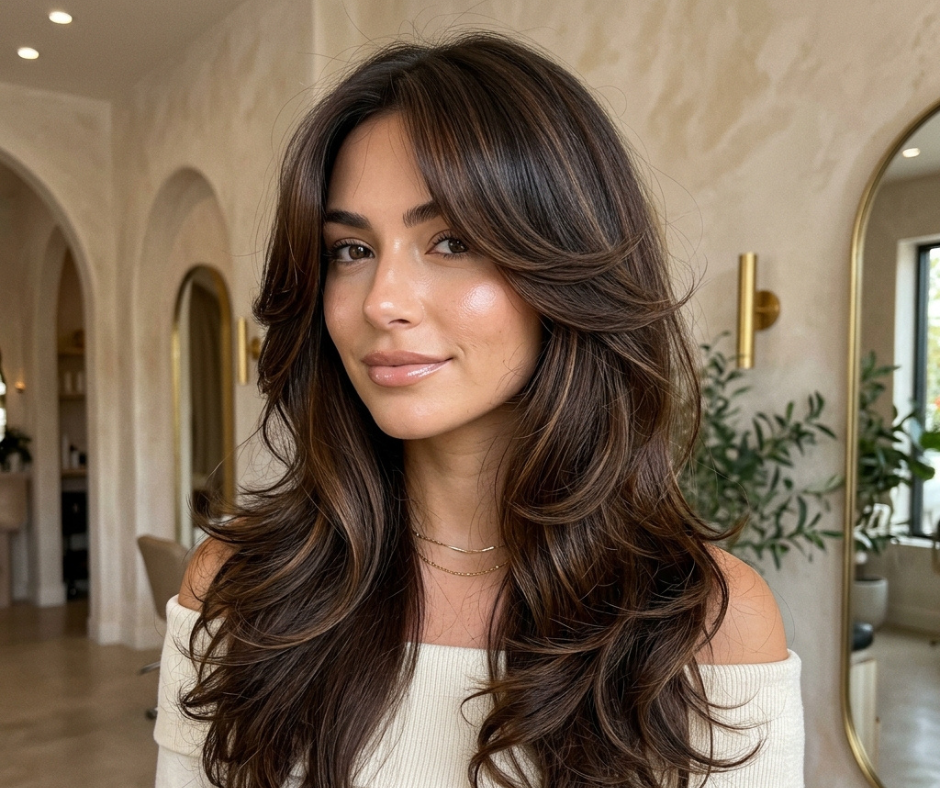

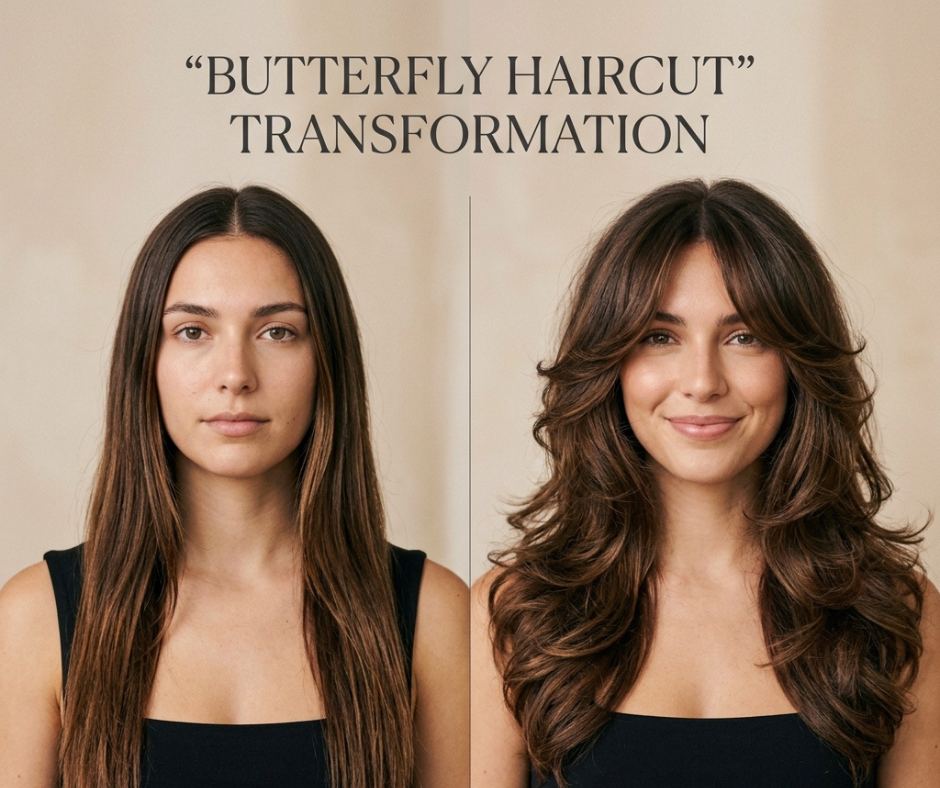
A butterfly haircut is a popular layered hairstyle that adds movement, volume, and soft face-framing detail without removing most of your hair’s length. It combines shorter layers around the face with longer layers underneath, creating a flowing shape that looks especially beautiful when styled with a blowout.
Whether you have long, medium, straight, wavy, or thick hair, this haircut can be adapted to suit your preferences. However, choosing the right version requires considering your hair texture, face shape, and styling routine. This complete guide explores the best butterfly haircut styles, their benefits, how to style them at home, and practical tips for maintaining your new look.
What Is a Butterfly Haircut and How Does It Work?
A butterfly haircut is a layered hairstyle that combines shorter face-framing pieces with longer layers throughout the hair. The shorter sections create movement around the face and crown, while the longer sections preserve the appearance of length. When styled with a round brush or rollers, these layers form a soft, wing-like silhouette that gives the haircut its name.
Unlike a blunt haircut, which keeps the ends relatively even, a butterfly haircut uses blended layers to create dimension and a lighter appearance. The shortest pieces may fall around the cheekbones, jawline, or shoulders, depending on your preferences. The remaining layers flow into the longer lengths, helping the hairstyle look balanced rather than choppy.
This voluminous layered hairstyle appeals to people who want more movement without committing to a dramatically shorter haircut. It also offers considerable styling flexibility. You can wear it with a bouncy blowout, loose waves, a middle part, or a relaxed everyday finish. However, the final appearance depends on your natural texture, hair density, and styling technique.
Best Butterfly Haircut Styles for Every Hair Length
The best butterfly haircut styles depend on your current hair length, the amount of volume you want, and how dramatically you prefer your layers to frame your face. Long hair allows for more noticeable contrast between shorter and longer sections, while medium and shorter versions require careful shaping to maintain the characteristic silhouette.
A butterfly haircut for long hair creates flowing layers that add movement without removing substantial length. This option works well if you love long hairstyles but want a lighter appearance around your face. For medium hair, shorter framing pieces and blended layers can create shape around the shoulders. A butterfly haircut for shoulder-length hair may have a softer appearance because there is less length available to emphasize the contrast between the layers.
A short butterfly haircut can resemble a layered bob or a feathered shoulder-length style. However, the stylist must carefully balance the shorter pieces with the remaining length. Too many short layers can make the ends appear thin, especially when your hair has low density. If you prefer a subtle transformation, ask for longer face-framing layers and a fuller perimeter. If you want a more noticeable result, discuss shorter layers around the cheekbones and crown.
Does a Butterfly Haircut Suit Your Face Shape?
A butterfly haircut can be customized for different face shapes because the stylist controls the position, length, and direction of the layers. Rather than following strict rules, consider which features you want to emphasize and how you usually part your hair. Your personal preferences and natural hair texture matter just as much as face shape.
For a butterfly haircut for round face shapes, longer face-framing pieces can create a more elongated visual line. Layers that begin around the cheekbones or below the jaw may suit people who prefer less width around their cheeks. An oval face generally accommodates a wide range of styles, including curtain bangs, cheekbone-length layers, and longer framing pieces.
A butterfly haircut for square face shapes can feature soft layers around the cheekbones and jaw to create a flowing outline. Heart-shaped faces may benefit from curtain bangs or framing pieces that balance the appearance of a wider forehead and narrower chin. For longer faces, layers that add width around the cheeks can create a balanced effect. Diamond-shaped faces can also work well with cheekbone-framing sections and longer layers. These suggestions are starting points, not strict requirements, so choose a style that makes you feel comfortable and confident.
Butterfly Haircut for Different Hair Types and Textures
Your hair texture and density influence how a butterfly haircut falls, how much volume it creates, and how much styling it requires. A skilled hairstylist adjusts the layering technique to suit your natural hair rather than copying the same shape for everyone.
A butterfly haircut for thin hair can create the appearance of fullness when the stylist uses controlled layers and preserves enough thickness at the ends. However, fine hair refers to the thickness of individual strands, while low-density hair describes how much hair grows across the scalp. If your ends already look sparse, excessive layering may make them appear even thinner. Lightweight mousse can help lift the roots without weighing down delicate strands.
A butterfly haircut for thick hair can reduce visual heaviness while creating movement through the mid-lengths. Longer layers help thick hair move more freely, but removing too much weight can create unwanted puffiness. A butterfly haircut for straight hair highlights the individual layers, although styling may be necessary to create a curved finish. Wavy hair naturally emphasizes movement, while curly hair requires careful consideration of shrinkage. Ask a stylist experienced with your texture to adapt the layers so the finished shape works with your natural hair.
Butterfly Haircut With Bangs vs. Without Bangs
The choice between bangs and no bangs changes the overall appearance of a butterfly haircut. Fringe creates a more defined frame around the forehead, while longer front layers offer flexibility and can be easier to maintain.
A butterfly cut with bangs may include curtain bangs, wispy fringe, or side-swept pieces that blend into the surrounding layers. Curtain bangs part near the center and sweep outward, creating a soft transition around the cheekbones. Wispy bangs provide a lighter appearance, while side-swept fringe adds movement without covering the forehead completely. However, shorter bangs often require more styling and regular trimming to maintain their shape.
A butterfly haircut without bangs relies on longer face-framing sections to create its signature outline. You can tuck these pieces behind your ears, sweep them to either side, or style them away from your face. This option may suit you if you dislike maintaining fringe or prefer to change your parting frequently. Before deciding, consider your everyday routine. If you regularly tie your hair back or prefer air-drying, longer front layers may be more convenient than short bangs.
Butterfly Haircut vs. Wolf Cut vs. Traditional Layers
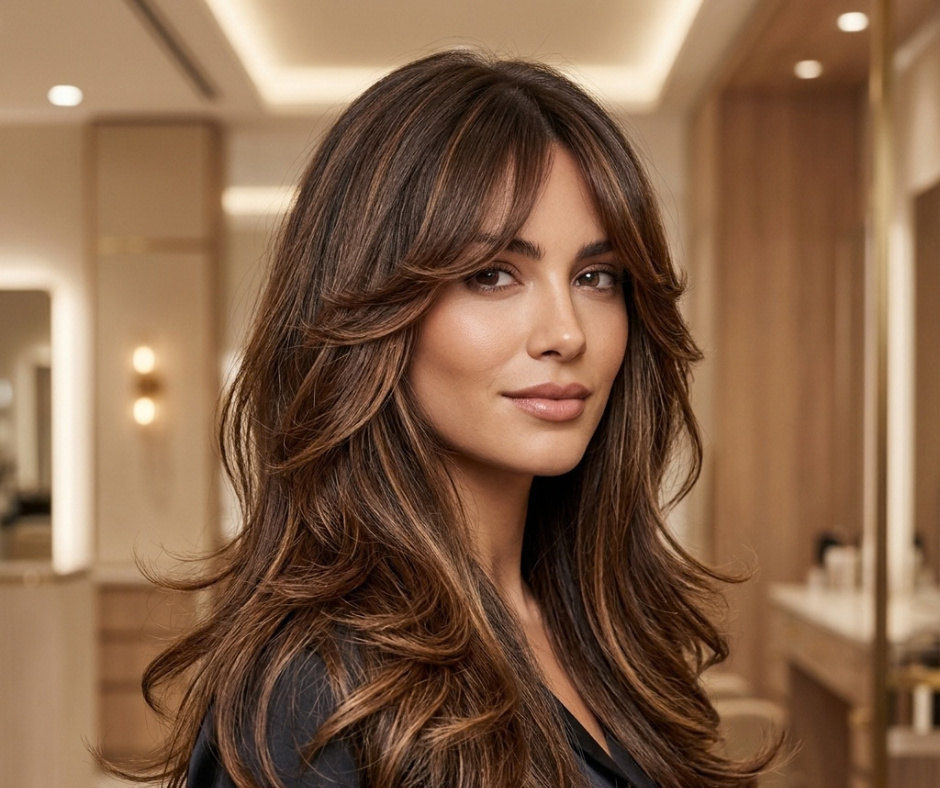
The butterfly haircut, wolf cut, and traditional layered haircut all use different lengths to create movement, but they produce distinct results. Understanding these differences can help you choose a style that matches your preferences and communicate more clearly with your hairstylist.
A butterfly haircut generally emphasizes flowing layers, soft face-framing pieces, and a voluminous finish. A wolf cut combines shag-inspired texture with a more deliberately tousled appearance. Traditional layers are a broader category that can range from subtle length adjustments to dramatic graduated sections. Their final appearance depends on how the stylist distributes the layers and shapes the ends.
Choose a butterfly haircut if you want a softer, more polished appearance while retaining much of your length. Consider a wolf cut if you prefer a textured, slightly edgy finish with more visible separation between sections. Traditional long layers offer flexibility if you want movement without committing to a specific hairstyle. None of these options is universally better. Your hair density, natural texture, preferred length, and willingness to style your hair should guide your decision.
How to Style a Butterfly Haircut at Home
Styling helps bring out the movement built into a butterfly haircut. Although you can wear the cut naturally, root lift and carefully shaped front layers can make its signature silhouette more noticeable. You do not need an extensive collection of tools, but choosing suitable products and techniques can improve the result.
For a classic butterfly haircut blowout, start with clean, damp hair and apply a heat protectant. If your roots tend to fall flat, use a small amount of lightweight volumizing mousse near the roots. Remove excess moisture with a blow-dryer before shaping individual sections with a round brush. Begin with the front pieces and guide them away from your face as you dry. Lift the brush at the roots to encourage volume, then curve the ends according to your preferred finish.
Work through the remaining layers in manageable sections and allow the hair to cool before brushing through the shape. Large rollers can help create additional fullness without requiring constant brush tension. If you prefer styling without heat, try soft rollers, loose twists, or products suited to your natural texture. A heat-free style may look less polished than a blowout, but it can still emphasize the layers. Use lightweight products for fine hair and moisture-focused products for naturally curly hair. Avoid excessive product because it can weigh down the layers and reduce movement.
How to Ask Your Hairstylist for the Perfect Butterfly Cut
A successful butterfly haircut begins with a clear conversation about your preferred length, layer placement, and styling routine. The name alone may not communicate the exact result you want, so bring reference photos showing the front, side, and back. Whenever possible, choose examples featuring hair with a texture and density similar to yours.
Explain how much length you want to preserve and where you would like the shortest pieces to fall. For example, you might prefer cheekbone-length framing with long layers underneath, or you may want a subtle version that begins closer to your jawline. Tell your stylist whether you usually blow-dry your hair, wear it naturally, or tie it back during the day.
During your consultation, discuss your hair texture, density, existing damage, and previous chemical treatments. If your hair is fine, ask how the stylist will preserve fullness through the ends. If your hair is curly, explain how much it shrinks when dry. You can say, “I’d like a butterfly haircut with soft face-framing layers and longer layers underneath. Please preserve as much of my overall length as possible and tailor the layers to my natural texture.” Before the cutting begins, confirm the intended shortest layer and overall length so you have realistic expectations.
Butterfly Haircut Maintenance, Cost, Pros, Cons, and Common Mistakes
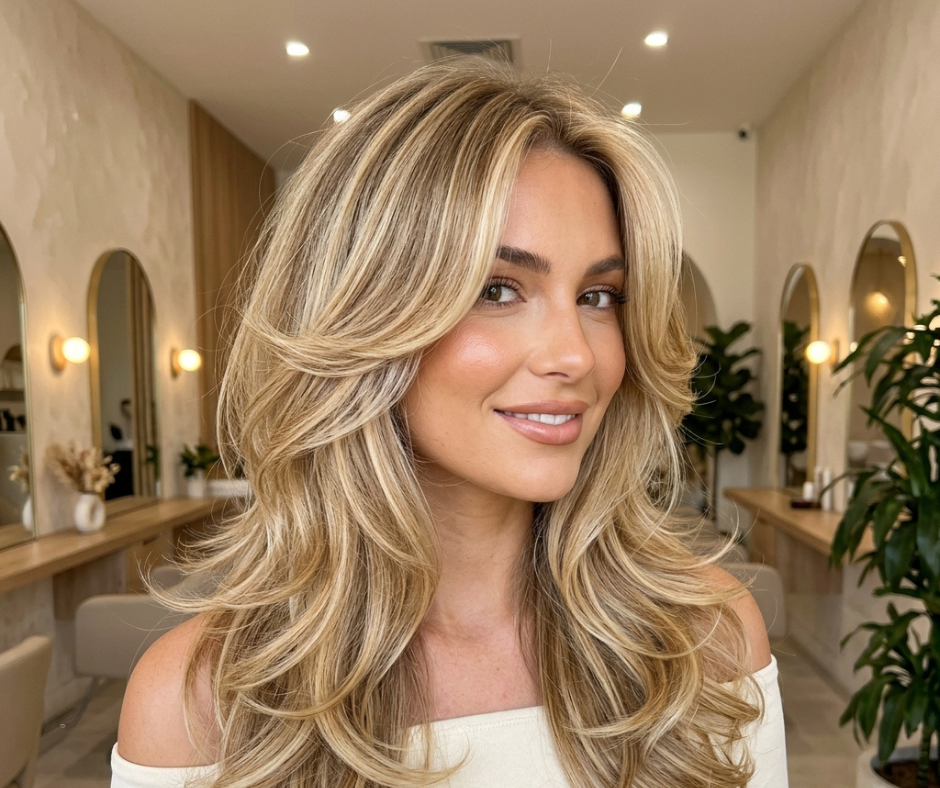
A butterfly haircut can offer movement and styling flexibility, but its maintenance requirements depend on your hair and the complexity of the cut. The shape may remain attractive as your hair grows, although the face-framing sections can gradually lose their original placement. Gentle detangling, regular conditioning, and appropriate heat protection help keep your hair looking healthy.
Salon prices vary by location, stylist experience, salon type, and the time needed to cut and style your hair. A detailed consultation or professional blowout may increase the total cost. Check the salon’s current price list rather than relying on a universal estimate. You should also consider the cost of styling products and tools if you want to recreate the salon finish at home.
The main benefit of a butterfly haircut is its ability to add visible movement without requiring a dramatically short overall style. It can adapt to different lengths, textures, partings, and fringe preferences. However, fine hair may lose visible fullness if the layers are too aggressive. Short front pieces may be difficult to tie back, and a polished blowout may take more time than expected. Curly hair can also behave differently from straight reference photos, making an experienced stylist particularly helpful.
Common problems include flat roots, layers that flip in the wrong direction, ends that appear too thin, and styling that loses volume quickly. Flat roots may improve with lighter products and better blow-drying technique. Front pieces that flip awkwardly may need to be redirected gently with a round brush. If your ends look sparse or the layers seem disconnected, ask a professional to assess the cut before removing more length. Avoid cutting dramatic face-framing sections yourself unless you have experience with layered cutting.
Frequently Asked Questions
Is a butterfly haircut good for thin hair?
Yes, it can create the appearance of more volume when the stylist uses controlled layers. Preserving a fuller perimeter is important if your hair has low density.
What hair length do you need for a butterfly haircut?
Long hair provides the most room for the classic contrast between short front layers and long lower sections. Medium hair can also work, while shorter versions require careful shaping.
Does a butterfly haircut make hair look thicker?
It can create the appearance of fullness through movement and root lift. However, excessive layering may make the ends look thinner, especially on fine hair.
Can you get a butterfly haircut without bangs?
Yes. Longer face-framing pieces can create the signature outline without a separate fringe, offering more flexibility with parting and everyday styling.
Is a butterfly haircut high-maintenance?
It depends on your preferred finish and natural texture. A polished blowout may require regular styling, while a softer version that works with your natural waves may need less effort.
Conclusion
A butterfly haircut offers a versatile way to add movement, face-framing detail, and the appearance of volume while preserving much of your overall length. The best version depends on your hair texture, density, preferred length, and willingness to style it.
Before booking your appointment, decide where you want the shortest layers to fall and how you expect to wear your hair each day. Bring reference photos and explain your priorities clearly. If you have fine hair, focus on preserving fullness. If you have thick or curly hair, choose a stylist who understands how your natural texture affects layering.
With thoughtful layer placement and a manageable styling routine, a butterfly haircut can complement your natural hair and create a look that feels polished, flattering, and personal.

Welcome to GamVexio! I’m Habib, a dedicated content writer with 1 year of experience in SEO, digital content, and website growth. I specialize in creating engaging, reader-friendly, and search-optimized content that helps websites reach a wider audience and strengthen their online presence.