
A great haircut can sharpen your appearance without requiring a dramatic change in length. The Mid Fade is a versatile choice that creates a clean transition around the sides and back while leaving room for different hairstyles on top. Whether you prefer textured crops, voluminous quiffs, natural curls, or a polished side part, this haircut offers plenty of ways to express your personal style.
However, choosing the right variation involves more than showing your barber a photograph. Your face shape, hair texture, desired contrast, and maintenance routine all influence the final result. This guide explores eight standout mid fade hairstyles, explains the main fade types, and shares practical advice for choosing, styling, and maintaining your ideal cut.
What Is a Mid Fade Haircut? Definition, Features and Benefits
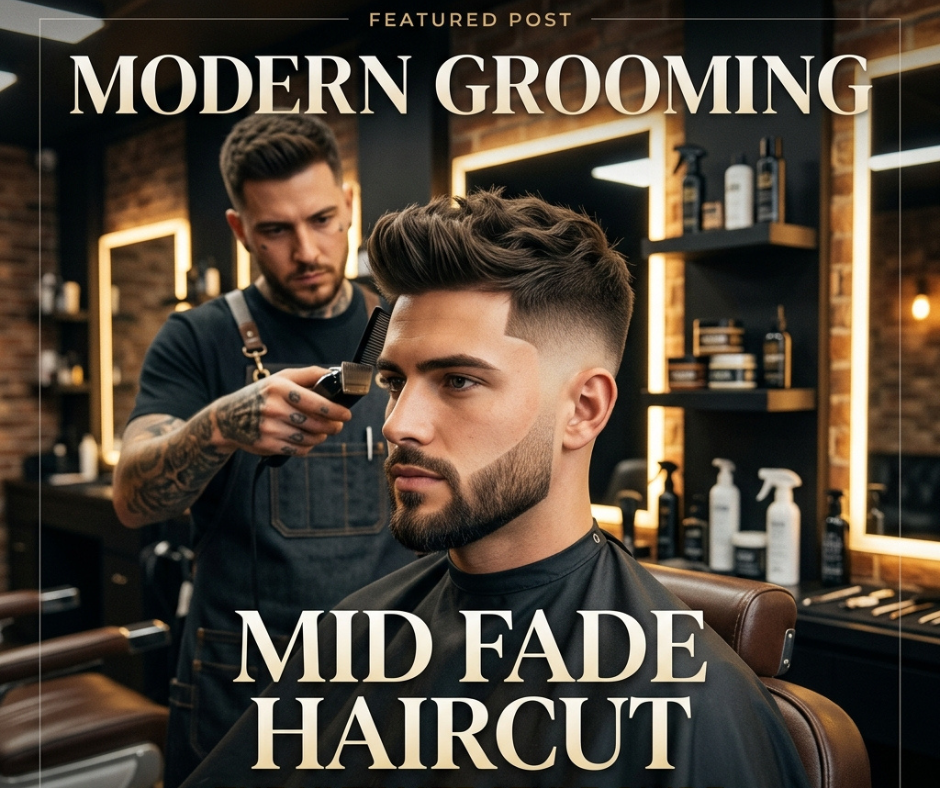
A mid fade haircut gradually transitions from shorter hair around the sides and back to longer hair higher on the head. The blend generally begins around the temples, between the placement of a low fade and a high fade. This middle position creates noticeable contrast without removing as much hair from the upper sides as some high fades do.
The barber uses clippers with different guard lengths, often combining them with a trimmer or other tools to soften visible lines. The shortest section can stop at a very short clipper length or reach the skin, depending on the style you request. Meanwhile, the hair on top can remain short, medium-length, or relatively long. That flexibility makes a mid fade suitable for many looks, from understated business cuts to bold, textured hairstyles.
Key Features of a Mid Fade
The defining feature is the location of the blend. A low fade begins closer to the ears and neckline, while a mid fade starts higher around the temples. A high fade pushes the transition farther up the sides, producing a more dramatic contrast.
A classic mid fade works particularly well when you want a balanced silhouette. You can combine it with a short crew cut, a textured fringe, a side part, or longer hair brushed backward. The fade also helps remove excess bulk around the sides, which can make a thick hairstyle look more controlled.
Why Choose a Mid Fade?
The main advantage is versatility. You can adjust the top length, the sharpness of the blend, and the amount of scalp exposure to create a haircut that suits your preferences. A softer finish looks more conservative, while a skin fade produces a stronger, more defined appearance.
A mid fade also pairs naturally with facial hair. Your barber can blend the sideburns into a beard or maintain a distinct separation for a more structured look. However, shorter fades reveal regrowth relatively quickly, so maintaining a crisp finish may require regular barber visits.
8 Best Mid Fade Haircuts for Men: Trending Styles and Ideas
The best mid fade hairstyles for men combine a well-blended fade with a top style that complements their hair type and daily routine. The eight options below offer different levels of volume, texture, formality, and styling effort. Use them as starting points rather than rigid templates because your barber can adjust each look to your hairline and head shape.
1. Mid Fade with Textured Crop
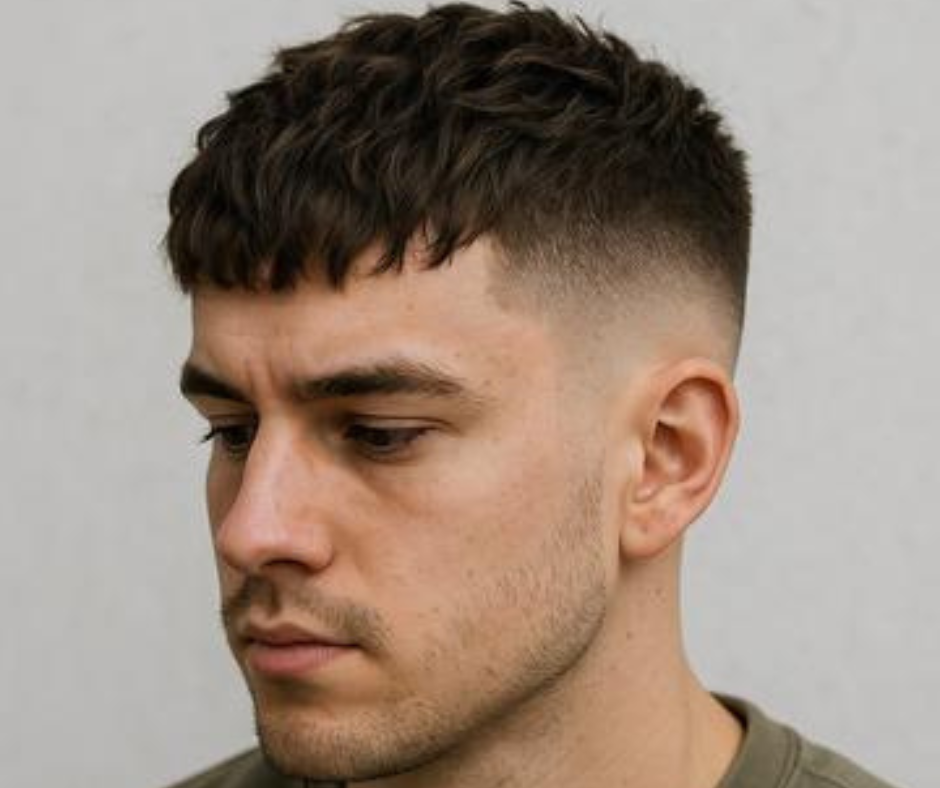
The mid fade textured crop combines closely blended sides with a short, choppy top. The hair usually falls forward or slightly toward the forehead, creating movement without requiring substantial height. This style works especially well for men who prefer a contemporary haircut that does not demand a complicated morning routine.
Ask your barber to preserve enough length on top to create separation between the strands. A small amount of matte clay can add definition without making the hair look overly shiny. If your hair grows forward naturally, the crop may need very little styling. For a softer appearance, request a gradual fade rather than an extremely sharp skin finish.
2. Mid Fade with Quiff
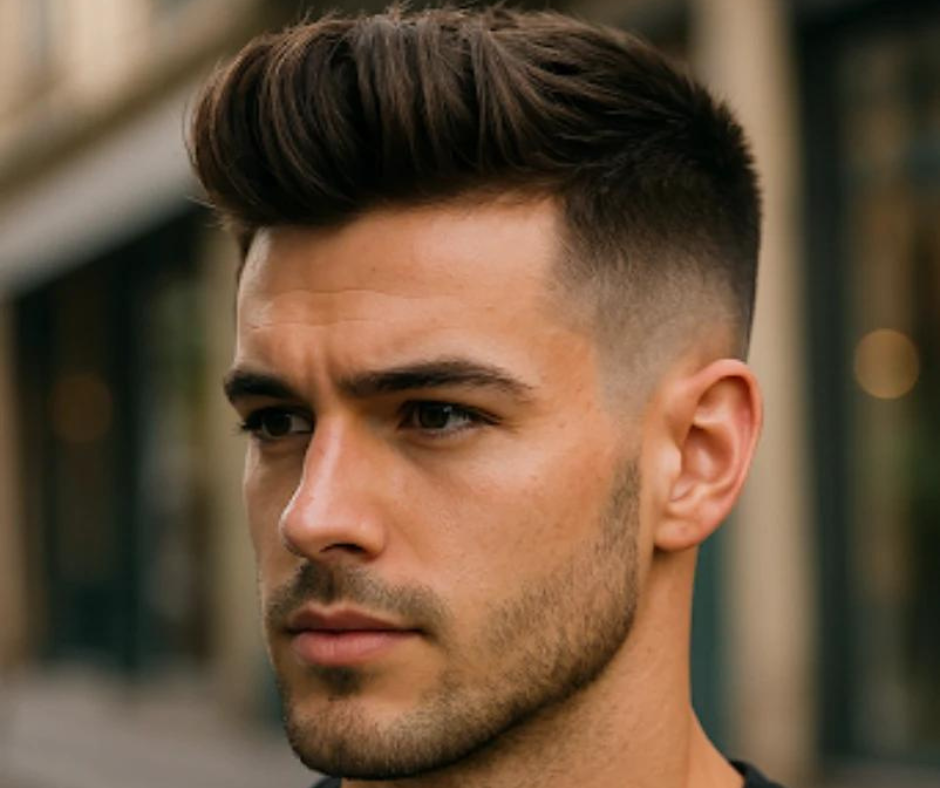
A mid fade quiff keeps the sides neat while directing the front hair upward and backward. The resulting volume adds height and creates a more prominent silhouette. It suits men who enjoy styling their hair and want a look that feels polished without appearing overly formal.
Start with slightly damp hair and use a blow-dryer to lift the front section. A round brush can help direct the hair into the desired shape. Finish with a small amount of matte clay or a flexible styling product. If your face is naturally long, keep the quiff moderate rather than excessively tall because too much height can exaggerate facial length.
3. Mid Fade with Pompadour
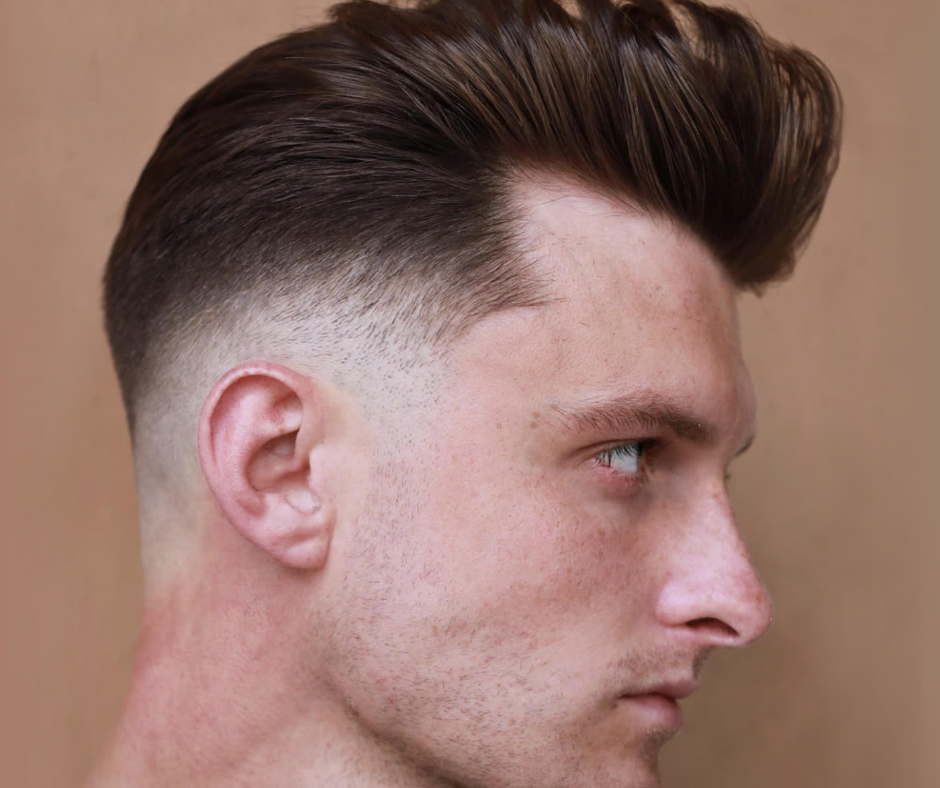
The mid fade pompadour features a fuller front section swept upward and backward, often with a smooth, rounded shape. Compared with a quiff, a traditional pompadour generally emphasizes a more continuous, sculpted area of volume. The faded sides provide contrast and prevent the overall haircut from looking excessively bulky.
This style works best when you have enough top length to create and hold the shape. Blow-drying plays an important role because it establishes the direction before you apply a finishing product. Pomade can provide shine and control, while a matte product creates a less glossy finish. If you prefer a modern appearance, ask for textured volume instead of a perfectly smooth surface.
4. Mid Fade with Curly Hair
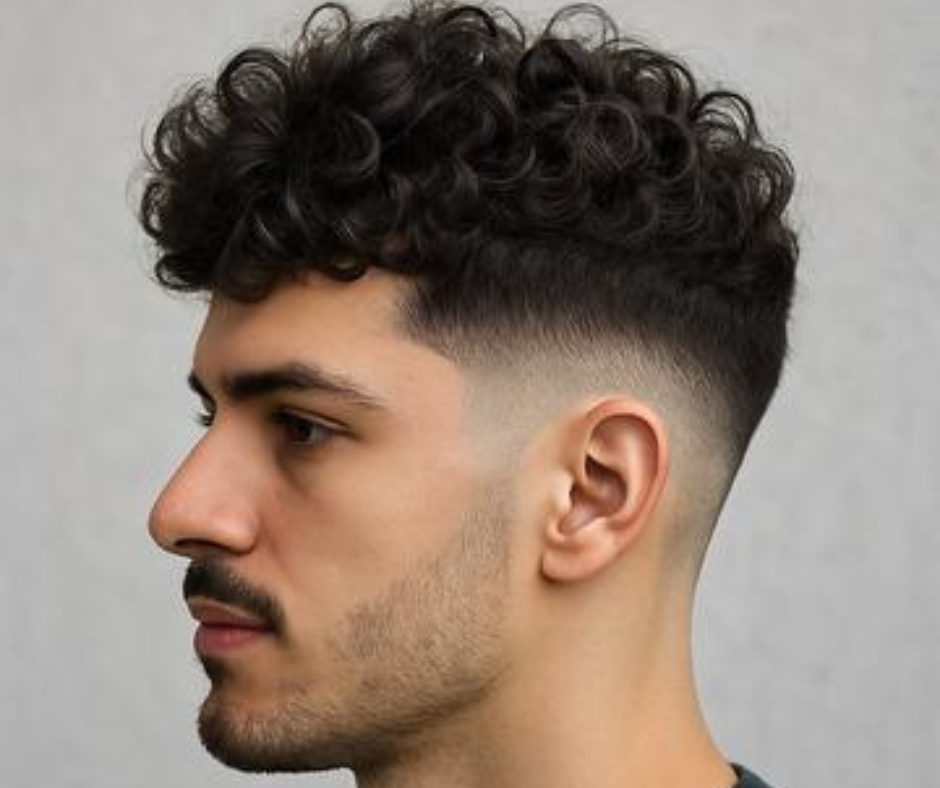
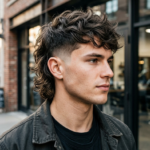
A mid fade with curly hair lets natural curls remain the focal point while the sides and back receive a controlled blend. The contrast between defined curls and shorter sides creates a balanced shape without requiring you to straighten or reshape your natural texture.
The barber should account for how much your curls shrink as they dry. Hair that appears long when wet can sit considerably shorter once the curls return to their natural pattern. Use a lightweight curl cream or leave-in styling product to support definition and reduce unwanted frizz. Avoid cutting the top too short unless you specifically want a compact curly finish.
5. Mid Fade with Waves
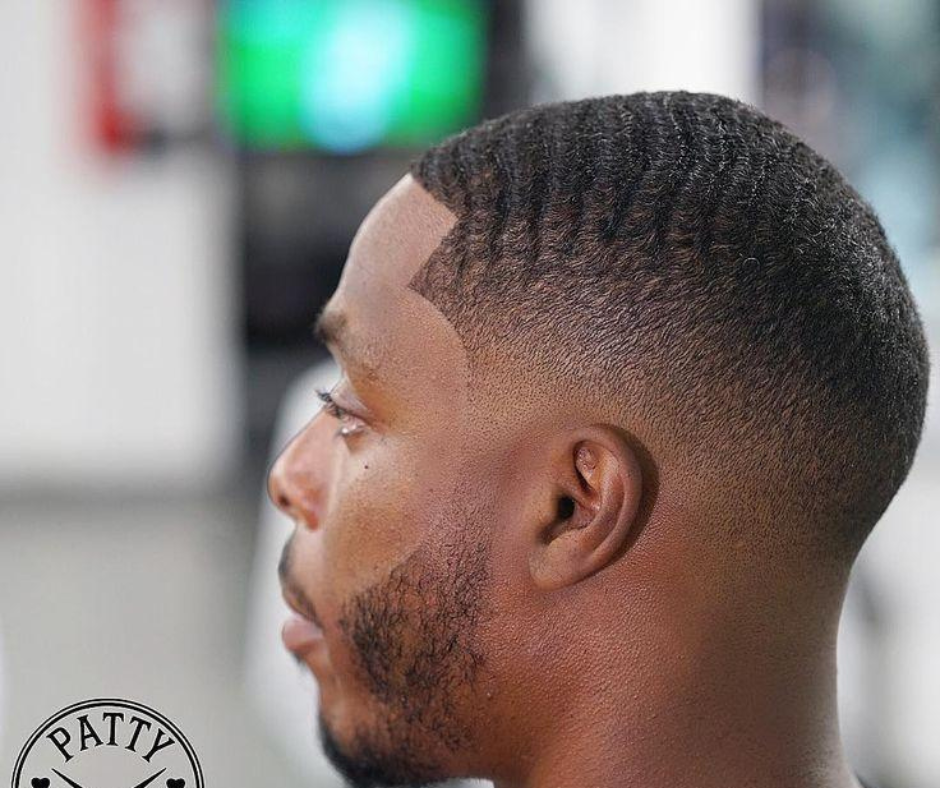
A mid fade with waves combines closely controlled sides with a patterned wave texture on top. The result can look especially sharp when the wave pattern is well developed and the hairline is neatly finished. This option is popular among men who prefer a shorter hairstyle with visible texture rather than a long, voluminous top.
Wave formation depends on your natural hair texture, hair length, brushing technique, and consistent care. A haircut alone does not create an established wave pattern. Ask your barber to preserve enough length to maintain your waves while blending the sides cleanly. If you already follow a wave-maintenance routine, explain your preferred top length before the clippers come out.
6. Mid Fade with Slick Back
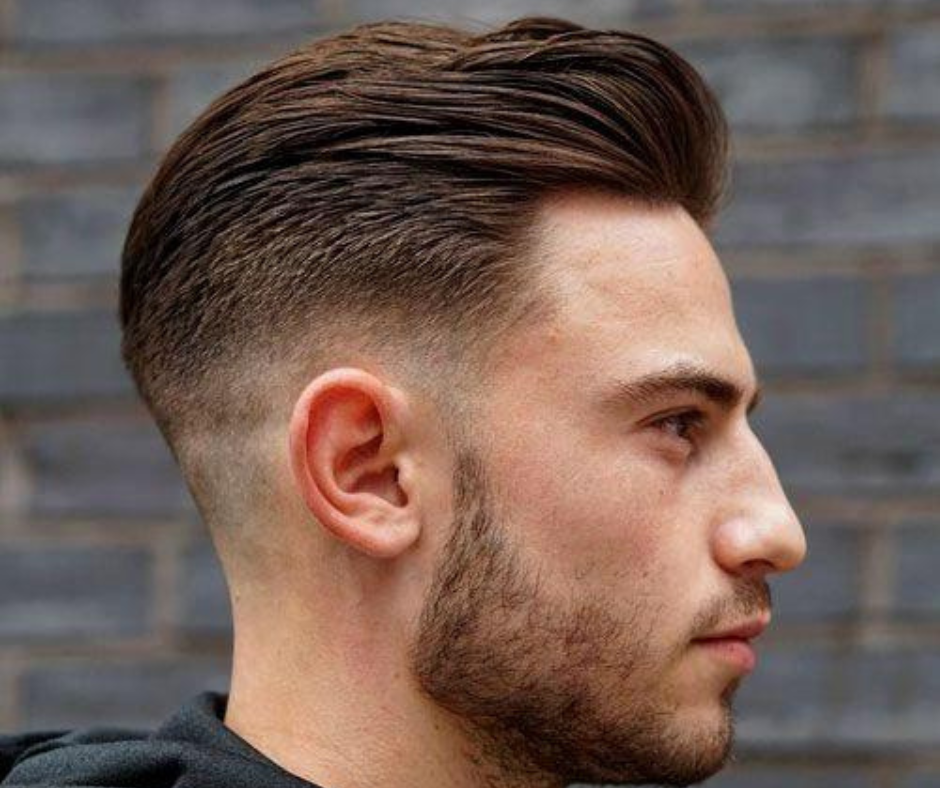
The mid fade slick back pairs shorter sides with hair combed smoothly away from the forehead. It creates a structured appearance that can suit smart-casual outfits, business settings, and formal occasions. The final look depends on whether you prefer a glossy, traditional finish or a softer modern version with natural movement.
You generally need enough length on top to direct the hair backward. Apply a small amount of styling product, then comb the hair into position. A suitable pomade offers control and can provide shine, while a lightweight cream produces a more relaxed finish. If your hair naturally separates or falls forward, ask your barber whether the top length and cut will support your preferred direction.
7. Mid Fade with Side Part
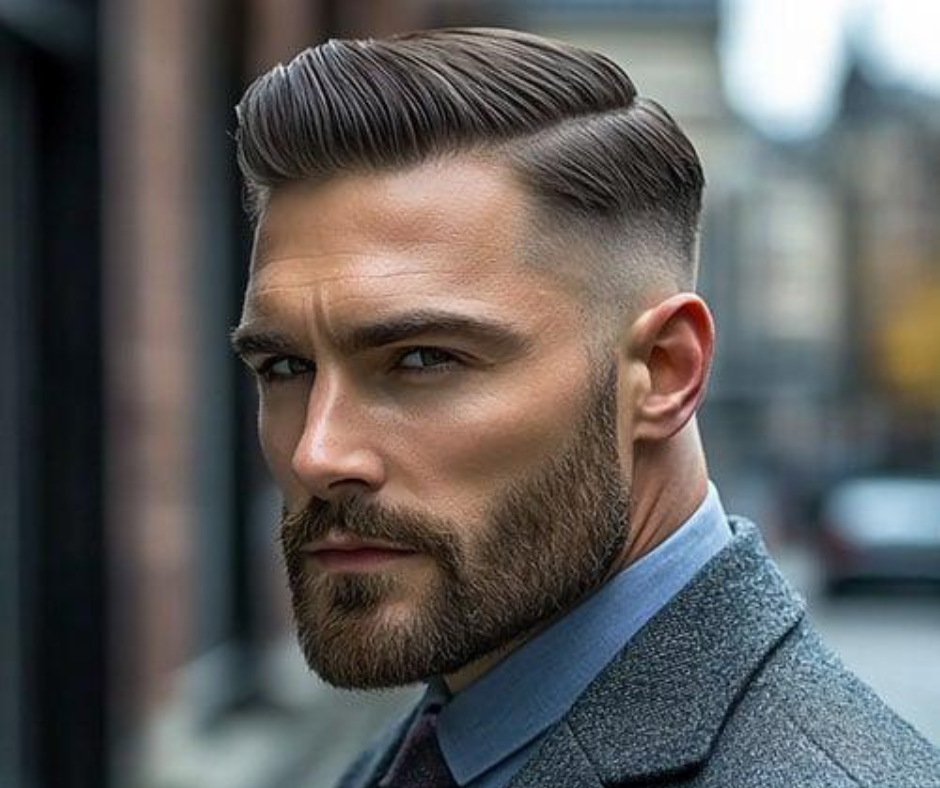
A mid fade side part combines a defined parting with neatly blended sides. It offers a practical middle ground between traditional barbering and contemporary styling. The top can remain relatively short for an executive appearance or slightly longer for additional movement and volume.
You can choose a natural part or a hard part cut into the hair with a trimmer. A natural part usually grows out more softly, while a hard part creates a more noticeable line that may require additional upkeep. For a professional environment, a moderate fade and restrained styling product often provide a polished result without excessive contrast.
8. Mid Fade with French Crop
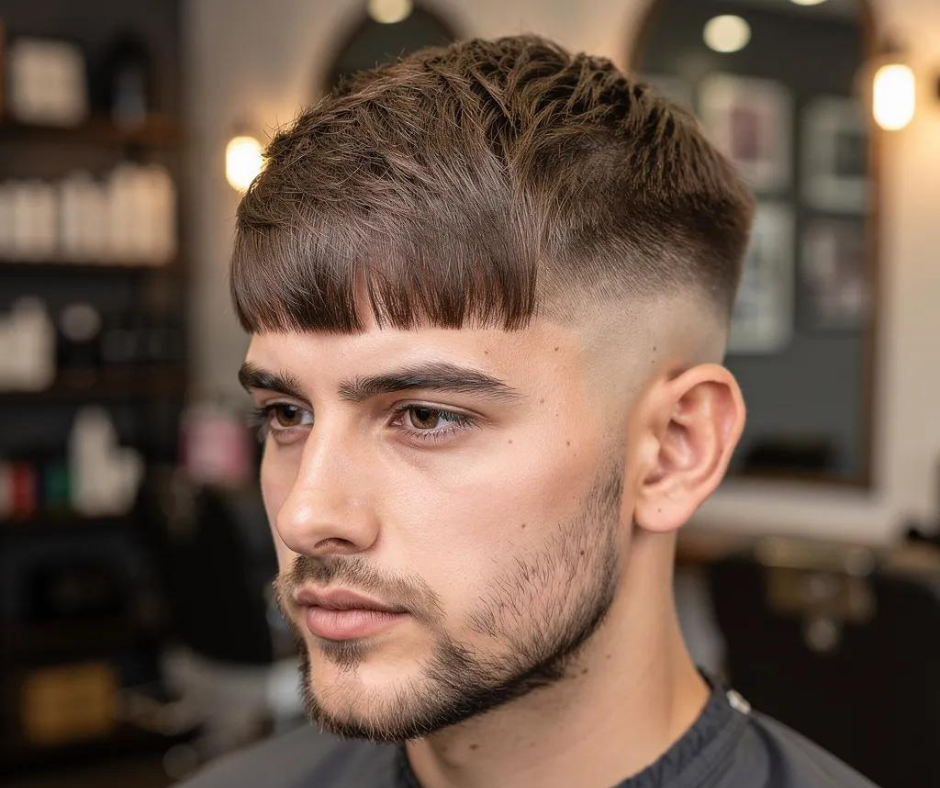
The mid fade French crop features short sides, a textured top, and a forward-facing fringe. The fringe can be blunt, slightly uneven, or softly textured depending on your preferences. This haircut works well for men who want a defined shape without needing to create significant height every morning.
Tell your barber how much forehead coverage you want. A shorter fringe produces a compact, clean look, while a longer fringe creates more flexibility and can soften the appearance of a prominent forehead. Use a small amount of matte product to separate the top strands. Avoid applying too much because heavy products can make the fringe clump together and lose its natural texture.
Different Types of Mid Fade Haircuts and Their Key Differences
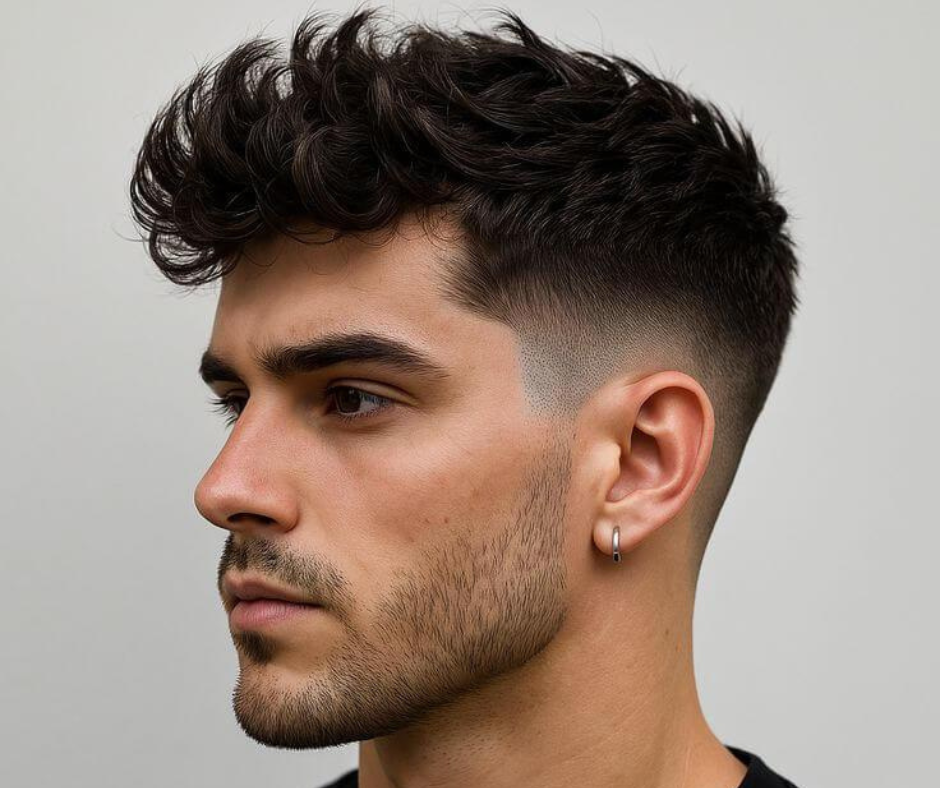
Not every mid fade creates the same finish. Some variations expose the scalp, while others preserve a darker, softer transition. The shape of the fade also matters because it changes how the haircut follows your head and frames your ears. Understanding these differences helps you describe the exact look you want rather than asking for a mid fade and leaving every detail to chance.
Mid Skin Fade and Mid Bald Fade
A mid skin fade gradually blends the hair down to bare skin around the lower sides. A mid bald fade describes essentially the same type of finish, emphasizing that the shortest section reaches the scalp. Both create strong contrast between the skin and the longer hair above. They work well with textured crops, pompadours, curls, and short buzz cuts. However, they also reveal regrowth more clearly, so they may require more frequent touch-ups if you want to preserve a freshly shaved appearance.
Mid Taper Fade
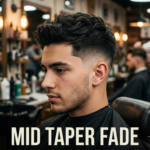
A mid taper fade focuses on gradually shortening the hair around selected areas, particularly the sideburns and neckline, rather than necessarily fading the entire side to the same degree. Barbers may use the term differently depending on local terminology and the specific cut. A conventional taper generally preserves more hair around the sides than a full mid fade. Choose this option if you prefer a restrained finish that grows out softly and works well in conservative environments.
Mid Drop Fade
A mid drop fade follows the natural curve of the head, dipping lower behind the ear before rising toward the back. This curved outline can add shape to the haircut and complement hairstyles with texture or volume on top. It works particularly well with curly tops, textured crops, and some modern mullet variations. If you want the fade to follow your head’s contours rather than maintain a more level line, a drop fade is worth discussing with your barber.
Mid Shadow Fade
A mid shadow fade creates a softer transition that retains the appearance of darker hair near the shortest section. Instead of emphasizing exposed skin, the barber blends through very short lengths to create a subtle shadow effect. This option suits men who want the structure of a fade without the stark contrast of a skin finish. It can also make the haircut appear less severe as the hair grows out.
Mid Burst Fade
A mid burst fade curves around the ear in a semicircular pattern, leaving more length toward the back than a conventional fade might. The design creates a rounded transition that works well with faux hawks, curly tops, and selected modern mullet styles. Although the burst fade is often associated with a localized area around the ear, its placement and overall shape can vary. Show your barber a reference photo so the intended curve is clear.
Mid Temp Fade
A mid temp fade focuses on the temple area, creating a clean transition around the front corners of the hairline. Depending on the exact cut, the rest of the sides may retain more length than a full mid fade. This variation pairs well with curls, waves, short textured tops, and defined line-ups. If you want a particularly clean temple area without removing too much hair elsewhere, ask your barber whether a temple-focused fade is the better option.
Mid Fade vs Low Fade vs High Fade: Which One Should You Choose?
The main difference between these haircuts is where the blending begins and how much contrast it creates. A low fade starts close to the ears and neckline, a mid fade begins around the temples, and a high fade moves the transition farther up the head. These placements affect the haircut’s overall silhouette, the amount of hair left on the sides, and how prominently the top stands out.
A mid fade often offers a useful balance because it provides visible definition without pushing the blend as high as a high fade. However, no single option suits everyone. Your head shape, preferred top length, workplace expectations, and willingness to maintain sharp edges should influence your choice.
| Feature | Low fade | Mid fade | High fade |
| Fade placement | Close to ears and neckline | Around temple level | Higher on the sides |
| Overall appearance | Subtle and understated | Balanced and defined | Bold and high-contrast |
| Hair left on sides | More | Moderate | Less |
| Suitable top styles | Classic cuts, side parts, curls | Crops, quiffs, curls, slick backs | Buzz cuts, textured tops, high-volume styles |
| Regrowth visibility | Often less obvious | Moderate | Can be more noticeable |
| Best for | A conservative, softer finish | Versatility and noticeable structure | A dramatic, modern appearance |
Choose a low fade if you want to preserve more hair around the sides or prefer a restrained look. A mid fade is a strong starting point if you want a contemporary haircut that adapts to different top styles. A high fade suits people who prefer more pronounced contrast, although the result depends on the specific cut and head shape. If you are unsure, ask your barber to recommend a starting height before committing to an especially high or skin-close finish.
How to Choose the Best Mid Fade for Your Face Shape and Hair Type
The best mid fade should work with your natural features rather than fight against them. Fade height, top length, fringe direction, and volume can all change how your face appears. Your hair’s density and growth pattern also matter because a style that looks excellent in a photograph may behave differently on your head.
Instead of choosing a haircut based on face shape alone, consider the complete picture: hairline, cowlicks, curl pattern, styling habits, and how much time you want to spend getting ready. A skilled barber can adapt the same basic mid fade to produce several distinct results.
Best Mid Fade for Different Face Shapes
- Oval face: Most mid fade variations can work well. Try a textured crop, side part, or quiff while keeping the proportions balanced.
- Round face: A moderate amount of height on top can add definition. A quiff or structured brush-back may create a more elongated appearance.
- Square face: A textured crop, crew cut, or classic side part can complement strong jawlines without adding unnecessary bulk.
- Long face: Avoid excessive height if you want to balance facial length. A side-swept fringe or a moderate-length textured top can help.
- Diamond face: A little width or texture around the upper sides may balance prominent cheekbones. Avoid removing too much side volume if your face already appears narrow at the temples.
- Heart-shaped face: A textured fringe or moderate top volume can help balance a wider forehead with a narrower chin.
These are styling suggestions, not strict rules. Hair length and styling direction can influence the result as much as the fade itself. If you are uncertain, ask your barber to explain how the proposed shape will complement your features before cutting.
Mid Fade for Straight, Wavy, Curly, and Coily Hair
Straight hair can emphasize clean lines and works well with side parts, slick backs, textured crops, and quiffs. Wavy hair naturally creates movement, making a brush-back or loose textured top a practical choice. Curly hair benefits from a barber who understands curl shrinkage and can preserve the desired shape when the hair dries.
Coily hair can pair beautifully with short textured tops, defined curls, waves, and afros. The right fade height depends on how much contrast you want between the sides and the natural texture above. Discuss the way your hair grows and how you usually style it because these details can influence the best blending approach.
Mid Fade for Thick, Thin, or Receding Hair
Thick hair often benefits from a fade that removes excess bulk around the sides while preserving enough top length for shape. Textured crops, quiffs, and brush-backs can all work, depending on how the hair naturally sits. Ask your barber to reduce weight where needed instead of simply cutting the entire top shorter.
For fine or thin hair, a shorter, well-proportioned top can help prevent the style from collapsing under its own weight. A soft mid fade may provide definition without making the top appear disproportionately sparse. If you have a receding hairline, consider a textured crop, a short side part, or a carefully shaped crew cut. No haircut can reverse hair loss, but the right proportions can create a more cohesive appearance.
Mid Fade with Beard: Best Combinations and Styling Tips
A mid fade with beard can create a connected, balanced appearance when the transition between your hair and facial hair looks intentional. The sideburn area is especially important because it links the haircut to the beard. Your barber can blend the two gradually or maintain a clearer separation depending on the style you prefer.
The right combination depends on beard density, face shape, and how much definition you want. A fuller beard adds visual weight around the lower face, while short stubble creates a lighter finish. Keeping the cheek line, neckline, and sideburns tidy can help the entire look appear deliberate rather than disconnected.
Mid Fade with Short Stubble
Short stubble pairs well with a mid fade when you want a clean, low-profile appearance. The facial hair adds slight definition without competing with the haircut. Ask your barber to keep the sideburn transition natural and avoid creating an unnecessarily harsh line between the fade and stubble.
Mid Fade with a Short Boxed Beard
A short boxed beard creates a more defined outline around the jaw and chin. It works well with a side part, textured crop, or brushed-back top. Keep the cheek line and neckline consistent with the overall level of sharpness you prefer. If you like a natural finish, avoid making the beard edges excessively geometric.
Mid Fade with a Full Beard
A full beard creates a stronger visual balance when paired with a neatly blended mid fade. The contrast between short sides and fuller facial hair can look particularly effective with textured hair or a controlled pompadour. Ask your barber to consider the beard’s density when shaping the sideburns. The aim is to connect the two areas smoothly without removing so much facial hair that the beard loses its natural shape.
How to Ask Your Barber for the Perfect Mid Fade
A good result starts with clear communication. The phrase “mid fade” identifies the general placement, but it does not specify the shortest length, the blending style, or the amount of hair you want to keep on top. Two people can request the same haircut and receive noticeably different results because those details remain open to interpretation.
Before your appointment, save one or two haircut reference photos that show the sides, back, and top. Choose an example with hair texture similar to yours, and explain which features you like. If the model has much thicker hair or a different curl pattern, ask your barber to adapt the shape rather than copy the photograph exactly.
What to Tell Your Barber
You can use this simple request as a starting point:
“I’d like a mid fade that starts around the temples, blends smoothly around the sides and back, and leaves enough length on top for a textured style. Please keep the fade at a moderate height and show me the shortest length before taking it down to the skin.”
Adjust that request to match your preferences. If you want a mid skin fade, specify that the shortest section should reach bare skin. For a softer finish, ask for a shadow effect or a blend that retains some darkness near the base. Explain whether you want a natural neckline, a squared neckline, a defined hairline, or a less structured finish.
Choosing the Right Clipper Guard and Top Length
Clipper guard numbers help you communicate approximate hair lengths. A common numbering system uses a No. 1 guard for roughly 3 mm, a No. 2 for roughly 6 mm, and a No. 3 for roughly 10 mm. Exact results can vary by clipper and cutting technique, and barbers often use smaller adjustments or no guard at the shortest sections.
Rather than requesting a guard number alone, describe the finish you want. For example, tell your barber whether you prefer visible scalp, a dark shadow, or enough length to soften the sides. Discuss the top separately because a No. 2 guard on the sides does not tell the barber how long the hair above should remain.
Reference Photos and Common Barber Communication Mistakes
One clear reference photo is usually more helpful than several pictures showing completely different haircuts. If possible, choose a front or three-quarter view and a rear view. Point out whether you like the fade height, top texture, fringe, sideburn transition, or neckline.
Avoid vague requests such as “make it short” or “give me a sharp fade” without further explanation. Also, speak up before the barber removes more length than you intended. If you are trying a mid fade for the first time, ask for a conservative starting point because raising a fade is easy, but restoring removed length takes time.
How to Style, Maintain, and Troubleshoot a Mid Fade Haircut
A mid fade can look sharp with minimal effort, but the top still needs a styling approach suited to your hair. Your routine will differ depending on whether you wear a textured crop, a quiff, curls, or a slick back. The goal is to support your hair’s natural behavior rather than use excessive product to force it into place.
Maintenance also affects the overall appearance. The faded sides may grow out faster visually than the longer top, particularly if you choose a skin-close finish. Establish a routine that matches your budget, hair growth, and preferred level of sharpness instead of assuming every mid fade needs the same appointment schedule.
Best Styling Products for Different Hair Types
Matte clay for textured crops and quiffs
Matte clay adds separation and a natural-looking finish. Start with a small amount, warm it between your palms, and work it through dry or nearly dry hair according to the product instructions. Add more only if needed.
Pomade for slick backs and side parts
Pomade helps control hair and define a polished shape. Depending on its formula, it may add substantial shine or a more restrained finish. Use a lightweight option if your hair becomes weighed down easily.
Sea salt spray for loose, textured styles
Sea salt spray can enhance the appearance of natural movement in straight or wavy hair. Apply sparingly because some formulas can leave hair feeling dry. Follow with a suitable conditioner if your hair needs additional moisture.
Curl cream for curly and coily hair
Curl cream can support definition and help manage frizz without flattening every curl. Apply an appropriate amount to damp hair and let the curls dry naturally or use a diffuser on a suitable setting.
Blow-drying can make a noticeable difference when you want height or a controlled direction. For a quiff or pompadour, direct the airflow toward the roots while lifting the front with a brush. For a slick back, guide the hair backward as it dries. If you prefer natural curls, use less manipulation and avoid brushing them dry unless your intended style calls for it.
How Often Should You Get a Mid Fade Trimmed?
The ideal interval depends on how sharp you want the fade to look. As a practical starting point, many people schedule touch-ups every two to four weeks. A skin-close fade may need attention sooner if you want the scalp area to remain especially clean, while a softer shadow fade can often grow out more naturally.
Hair growth rates, texture, and personal preferences all affect the schedule. You do not necessarily need a complete haircut every time. Ask your barber whether a sides-only cleanup is suitable between full appointments, especially if the top still has the length and shape you want.
Common Mid Fade Problems and How to Avoid Them
A few common issues can affect the finished result, but most are easier to prevent than correct.
| Problem | Possible cause | Practical solution |
| Fade looks too high | The blend begins above your preferred level | Show a reference photo and confirm the starting height before cutting |
| Visible horizontal lines | The blending between clipper lengths is incomplete | Ask your barber to soften the transition |
| Too much scalp showing | The shortest section is closer to skin than expected | Specify a shadow finish or a longer starting length |
| Top looks flat | Insufficient length, unsuitable product, or poor styling direction | Adjust the cut and use an appropriate blow-drying technique |
| Curls lose their shape | The top was cut without accounting for curl shrinkage | Request a curl-aware cut and use suitable styling products |
| Fade loses its sharpness quickly | Regrowth changes the contrast of short sections | Schedule touch-ups according to your preferred finish |
Avoid trying to fix an uneven fade by repeatedly cutting into it yourself. Small adjustments can quickly remove too much hair and create a higher fade than you intended. If the blend is noticeably uneven, a skilled barber can assess whether it can be softened immediately or needs time to grow out.
Mid Fade Haircut Pros, Cons, and Alternatives
A mid fade offers a useful combination of structure and flexibility, but it is not automatically the best choice for every person. The same haircut can look understated with a soft blend and short top or dramatic with a skin fade and substantial volume. Your preferred finish should reflect your lifestyle, styling habits, and comfort with regular maintenance.
The main trade-off is that shorter sides create definition but can make regrowth more visible. If you prefer a haircut that stays visually consistent for longer between appointments, a softer fade or taper may be more practical. Consider the upkeep before choosing the sharpest version of the style.
Advantages and Disadvantages of a Mid Fade
| Advantages | Disadvantages |
| Works with many hairstyles and hair textures | Short sides can show regrowth relatively quickly |
| Creates a clean, defined silhouette | Very sharp fades may need frequent touch-ups |
| Can reduce the appearance of bulk on the sides | Incorrect placement may change your head’s proportions |
| Pairs well with beards and different neckline finishes | Skin-close versions can expose scalp or skin irregularities |
| Can look casual, modern, or professional | Some top styles require daily styling and products |
A mid fade is especially useful when you want a haircut that can shift between casual and polished. However, its suitability depends on execution. A balanced cut with a well-shaped top often looks better than an extreme fade that does not complement your hairline or head shape.
Mid Fade vs Mid Taper: Which Is Better for You?
A conventional mid fade blends a broader section of the sides and back, while a mid taper typically concentrates the shortening around the sideburns and neckline. Terminology can vary between barbers, so ask to see the intended shape before starting. A taper generally preserves more hair around the sides and often grows out more softly.
Choose a mid fade if you want a more noticeable transition and defined contrast. Choose a mid taper if you prefer a conservative finish or want to keep the sides fuller. Both can work with short crops, curls, side parts, and longer top styles, depending on how the barber adapts the cut.
When to Consider a Low Fade, High Fade, or Scissor Cut
A low fade is worth considering if you want subtle definition around the ears while retaining more length higher on the sides. A high fade offers stronger contrast for people who prefer a more dramatic silhouette. A scissor cut may be a better option if you want softer edges, more natural side volume, or a traditional shape without a pronounced clipper fade.
Your maintenance preferences matter too. A softer cut can be more forgiving as it grows, while a sharply defined fade may require more frequent visits. If you are uncertain, discuss the alternatives with your barber and choose the version that fits both your desired appearance and your routine.
Frequently Asked Questions
Is a mid fade good for every face shape?
A mid fade can suit most face shapes when the barber adjusts the top length, fade height, and overall proportions. Round faces may benefit from moderate height, while longer faces often look balanced with less volume on top. Your hair texture and personal preferences also influence the result.
How long does a mid fade haircut last?
A mid fade typically looks freshest for around one to two weeks, although the overall haircut can remain wearable for several weeks. Skin-close fades show regrowth sooner than softer blends. Many people schedule touch-ups every two to four weeks, depending on their desired appearance.
Is a mid fade professional enough for work?
Yes. A mid fade can look professional when paired with a neat top, controlled styling, and clean edges. A classic side part, short textured crop, or modest brush-back works well in many workplaces. If your workplace has conservative grooming expectations, choose a softer fade rather than an extremely high-contrast finish.
What is the difference between a mid fade and a mid taper?
A mid fade generally blends a larger portion of the sides and back, creating a more noticeable transition. A mid taper concentrates the shortening around areas such as the sideburns and neckline, usually preserving more hair elsewhere. Ask your barber to explain the intended shape because terminology can vary.
Does a mid fade look good with curly or straight hair?
Yes. Straight hair works well with quiffs, side parts, slick backs, and textured crops. Curly hair pairs naturally with defined curls, short fringes, and rounded tops. The barber should adapt the cut to your hair’s natural movement, density, and growth pattern.
Final advice
The best Mid Fade is the one that complements your hair, face shape, and daily routine. Start by choosing a top style you genuinely like, then decide how much contrast you want on the sides. Share reference photos with your barber, discuss your preferred length, and be clear about maintenance expectations. Whether you choose a textured crop, curly top, quiff, or classic side part, a well-planned fade can give you a clean, adaptable haircut without sacrificing your personal style.

Welcome to GamVexio! I’m Habib, a dedicated content writer with 1 year of experience in SEO, digital content, and website growth. I specialize in creating engaging, reader-friendly, and search-optimized content that helps websites reach a wider audience and strengthen their online presence.