
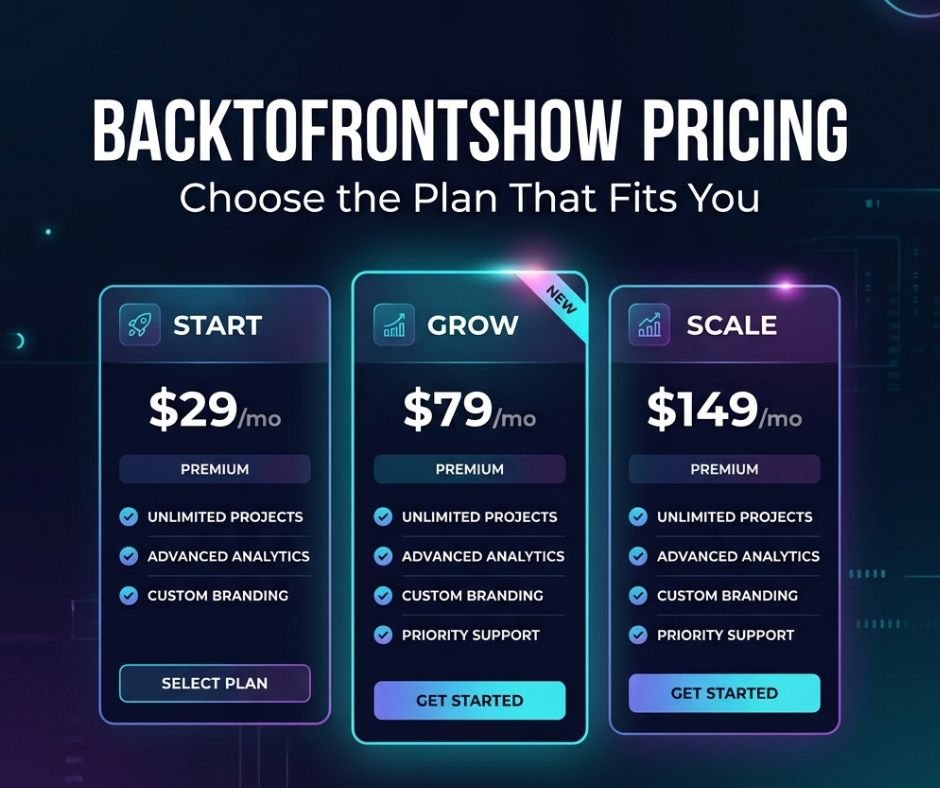

If you’re trying to figure out what BackToFrontShow actually costs, you’re not alone. Pricing pages for subscription-based platforms rarely tell the whole story, and BackToFrontShow pricing is no exception. Between tiered plans, optional add-ons, and billing cycles that can quietly change your total cost, it’s easy to end up paying for more than you need or missing out on features that would’ve made a cheaper plan worthwhile.
This guide walks through everything that shapes BackToFrontShow’s subscription cost, from how the pricing tiers are structured to what each plan typically includes, how billing works, and how to avoid the most common mistakes people make when signing up. By the end, you’ll have a clear framework for deciding whether the price matches the value you’ll actually get.
Because pricing details, promotions, and plan names can shift over time, always confirm current numbers directly on BackToFrontShow’s official pricing page before you commit to a purchase. What follows is a practical framework for evaluating that pricing once you have it in front of you.
What Is BackToFrontShow and Who Is It For?
Before any conversation about cost makes sense, it helps to understand what you’re actually paying for. BackToFrontShow is a platform that people typically discover while researching a specific service, content library, or set of tools tied to its membership model. Like most subscription products, its value depends heavily on how consistently you use it and whether the included features solve a real problem for you.
The platform tends to appeal to two different kinds of users: people who want a lower-commitment way to sample the content or tools before paying, and people who need deeper functionality, priority support, or higher usage limits on an ongoing basis. Knowing which group you fall into matters more than the sticker price alone, because it determines whether a basic plan will feel limiting within a few weeks or whether it’ll comfortably cover your needs long-term.
BackToFrontShow Pricing Plans and Costs
Most subscription platforms, including BackToFrontShow, structure their pricing plans around a few predictable tiers: a free or limited entry point, one or two paid tiers with expanding features, and sometimes a custom or enterprise-level option for larger users. The exact dollar amounts change often enough due to promotions, regional pricing, or plan updates that quoting a fixed number here risks being outdated by the time you read it.
Instead, here’s how to evaluate the pricing structure you’ll find on the official site:
| What to Check | Why It Matters |
| Monthly vs. annual price | Annual billing usually lowers the effective monthly cost but requires a longer commitment |
| What’s included at each tier | Higher tiers often unlock more storage, support, or advanced tools |
| Introductory pricing | Some offers apply only to the first billing cycle, not the full term |
| Currency and region | US pricing may differ from other markets |
| Renewal terms | Confirm whether the price is locked in or can increase at renewal |
Reading the plan page with this checklist in hand gives you a much clearer picture than just glancing at the lowest advertised number.
Monthly vs. Annual Billing: Which Saves You More
Annual subscription billing almost always costs less per month than paying monthly, since providers use the discount to encourage longer commitments. That said, the savings only pay off if you’re confident you’ll stick with the platform for the full year. If you’re still testing whether BackToFrontShow fits your workflow, starting with monthly payment and switching to annual later is usually the safer move, even if it costs a bit more upfront.
Is There a Free Plan or Free Trial?
Many platforms in this category offer either a free plan with limited access or a time-boxed free trial of the paid tier. A free plan typically gives you a taste of the core experience enough to judge whether the interface, content, or tools match what you need but usually restricts advanced features, usage volume, or support access. If BackToFrontShow currently offers either option, it’s worth using it fully before upgrading, since it’s the most reliable way to judge value for money without financial risk.
What’s Included in Each BackToFrontShow Plan
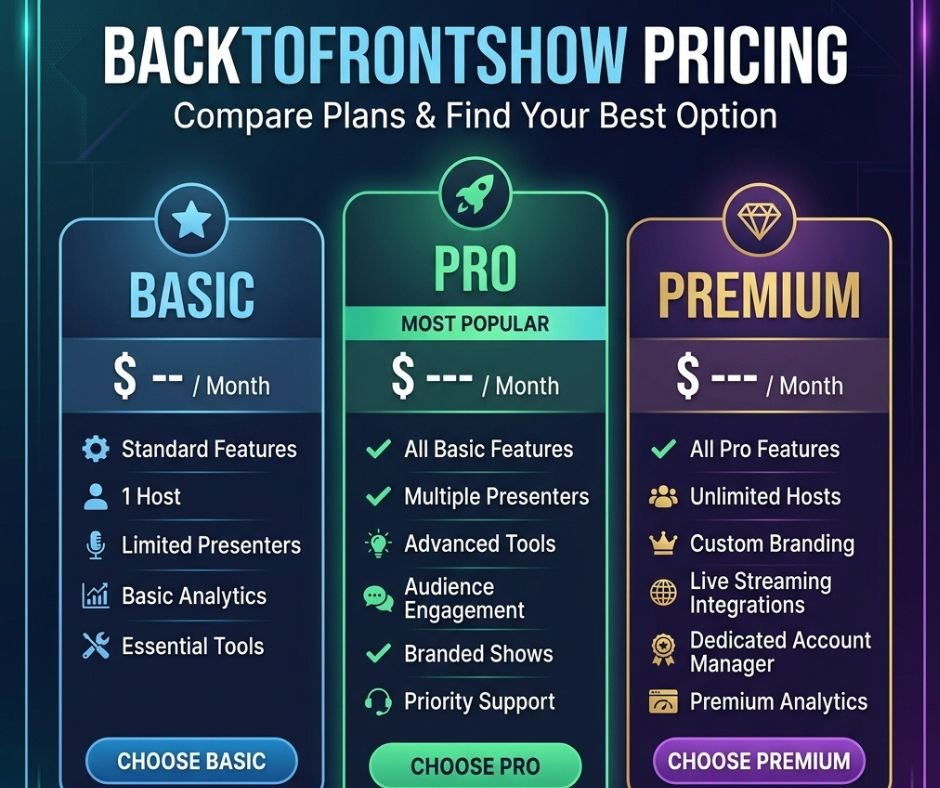
Price alone doesn’t tell you much without knowing what sits behind it. Lower-tier plans generally cover the core functionality: basic access, standard support response times, and a reasonable but capped amount of usage. These plans work well for individuals or small-scale users who don’t need advanced customization.
Higher tiers typically layer on things like priority customer support, expanded usage limits, deeper analytics or reporting, and sometimes integrations with other tools you already use. The jump in price between tiers should correspond to a real jump in capability if you’re paying significantly more for premium features you won’t actually use, that’s a signal to reconsider the plan, not a reason to assume the upgrade is automatically worth it.
BackToFrontShow Pricing vs. Alternatives
No pricing decision happens in a vacuum, and it’s reasonable to compare BackToFrontShow’s cost against other tools that solve a similar problem. When you do this comparison, look past the headline price and weigh it against three things: the depth of included features, the quality of support, and how well the platform fits your specific use case.
A cheaper alternative that lacks a feature you rely on daily isn’t actually cheaper once you factor in the time or workaround cost. Conversely, a pricier option can be the better deal if it eliminates the need for a second tool entirely. The honest way to compare is to list your must-have features first, then check which platforms meet that bar before ranking them by price.
Hidden Costs, Add-Ons, and Extra Fees to Know About
Base subscription pricing rarely tells the whole story. Many platforms and this is worth checking specifically for BackToFrontShow offer optional extras like workshops, one-on-one sessions, premium add-ons, or third-party integrations that sit outside the core subscription fee. These aren’t usually required to get value from the main plan, but they can add up if you opt into several of them.
It’s also worth checking whether any tools recommended alongside the platform (hosting, email software, or similar services) come bundled in the price or need to be purchased separately. Building a realistic budget means accounting for these optional costs upfront rather than being surprised by them later. Before you subscribe, read the billing FAQ or terms page closely, since that’s usually where these details are disclosed.
How to Choose the Right BackToFrontShow Plan for Your Needs

Picking a plan comes down to matching your actual usage against what each tier offers, rather than defaulting to the middle option because it “sounds balanced.” Start by listing what you need the platform to do in a typical week, then compare that list against the plan comparison table on the pricing page.
If you’re new to the platform, it’s usually smarter to start on the lowest tier that meets your immediate needs and upgrade later if you outgrow it, rather than committing to a higher tier speculatively. Most platforms make upgrading simple and prorate the difference, so there’s little downside to starting conservatively. On the other hand, if you already know you’ll need advanced support or higher usage limits from day one, jumping straight to a higher tier can save you the hassle of migrating settings or data later.
Is BackToFrontShow Pricing Worth It? A Value Analysis
Whether the price is “worth it” depends entirely on what you’d otherwise spend time or money doing without it. If BackToFrontShow replaces a manual process, consolidates several tools into one subscription, or saves you measurable time each week, the cost is easier to justify even at a higher tier.
If your usage is occasional or exploratory, though, a lower-cost or free option may deliver comparable benefits without the ongoing commitment. A useful gut check: calculate what the annual cost works out to, then ask whether you’d pay that amount in a single upfront purchase for the same access. If the answer is yes, the affordability case is solid. If you hesitate, it’s worth trialing a lower tier first.
Common BackToFrontShow Pricing Mistakes to Avoid
A surprising number of subscription regrets come from avoidable mistakes rather than the platform itself being a bad fit. Watch out for these:
- Paying for a higher tier “just in case.” Committing to advanced features you haven’t confirmed you’ll use inflates cost without guaranteed benefit.
- Missing the difference between monthly and annual savings. Annual plans lock you in longer, so only choose this if you’re confident about long-term use.
- Ignoring renewal terms. Some promotional prices apply only to the first term, with standard pricing kicking in afterward.
- Skipping the cancellation window. Missing a cancellation deadline before renewal can result in an unwanted charge.
- Overlooking optional add-ons. Workshops or premium extras can meaningfully raise your total cost if you opt into several.
Avoiding these mistakes usually comes down to reading the pricing details carefully once, rather than skimming the plan page and assuming it works like every other subscription you’ve used.
BackToFrontShow Billing, Cancellation, and Refund Policy
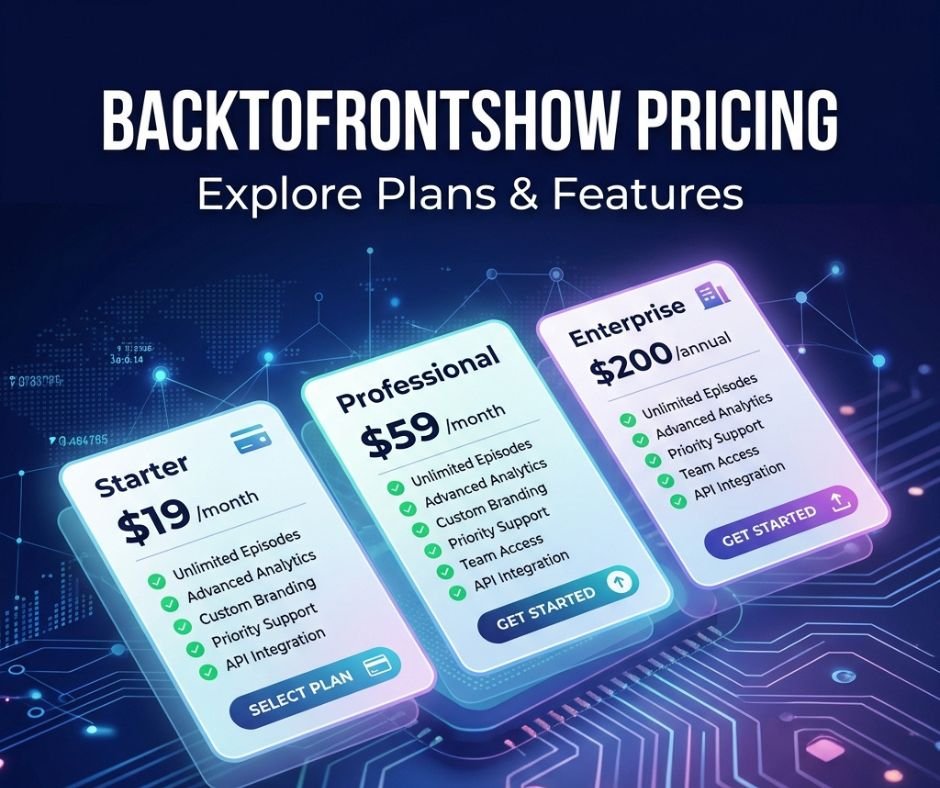
Billing terms matter just as much as the price itself, since they determine how much flexibility you have if your needs change. Most subscription platforms charge on a recurring billing cycle monthly or annually and automatically renew unless you cancel before the next charge date. It’s worth checking your account settings shortly after signing up so you know exactly where to manage or cancel your subscription later.
Refund policy terms vary by provider and sometimes by promotion, so don’t assume a standard money-back window applies unless it’s explicitly stated at checkout or in the terms of service. If a refund or cancellation policy isn’t clearly listed on the pricing page, it’s reasonable to contact support directly and get confirmation in writing before you subscribe, especially if you’re paying for an annual plan upfront.
FAQs
Is BackToFrontShow free?
Some subscription platforms in this category offer a free tier or limited free access, though it typically comes with restrictions on features or usage. Check the current pricing page to confirm whether a free option is available right now.
How much does BackToFrontShow cost?
Costs vary by plan tier and billing cycle, and pricing can change with promotions or updates. Confirm current numbers on the official pricing page rather than relying on older third-party summaries.
Does BackToFrontShow offer a free trial?
Many platforms offer a trial period on paid tiers so you can test premium features before committing. Availability and length can change, so check the signup page for current trial terms.
Can I cancel BackToFrontShow anytime?
Most subscriptions allow cancellation at any point, though you’ll typically retain access until the end of your current billing period. Always confirm the exact cancellation process in your account settings.
Which BackToFrontShow plan is best?
The best plan depends on your usage level and which features you actually need. Casual or occasional users often do fine on a lower tier, while frequent users benefit more from the expanded limits and support in higher tiers.
Final Verdict
There’s no universal right answer to whether BackToFrontShow pricing is a good deal — it depends on how closely the plan’s included features match what you’ll actually use. If you take the time to compare tiers against your real needs, check the billing terms before committing, and start conservatively if you’re unsure, you’ll avoid the most common regrets people run into with subscription pricing.
The most reliable next step is simple: pull up BackToFrontShow’s current official pricing page, run it through the checklist in this guide, and choose the plan that matches your actual usage rather than the one that just sounds like the safest middle ground.

Welcome to GamVexio! I’m Habib, a dedicated content writer with 1 year of experience in SEO, digital content, and website growth. I specialize in creating engaging, reader-friendly, and search-optimized content that helps websites reach a wider audience and strengthen their online presence.