
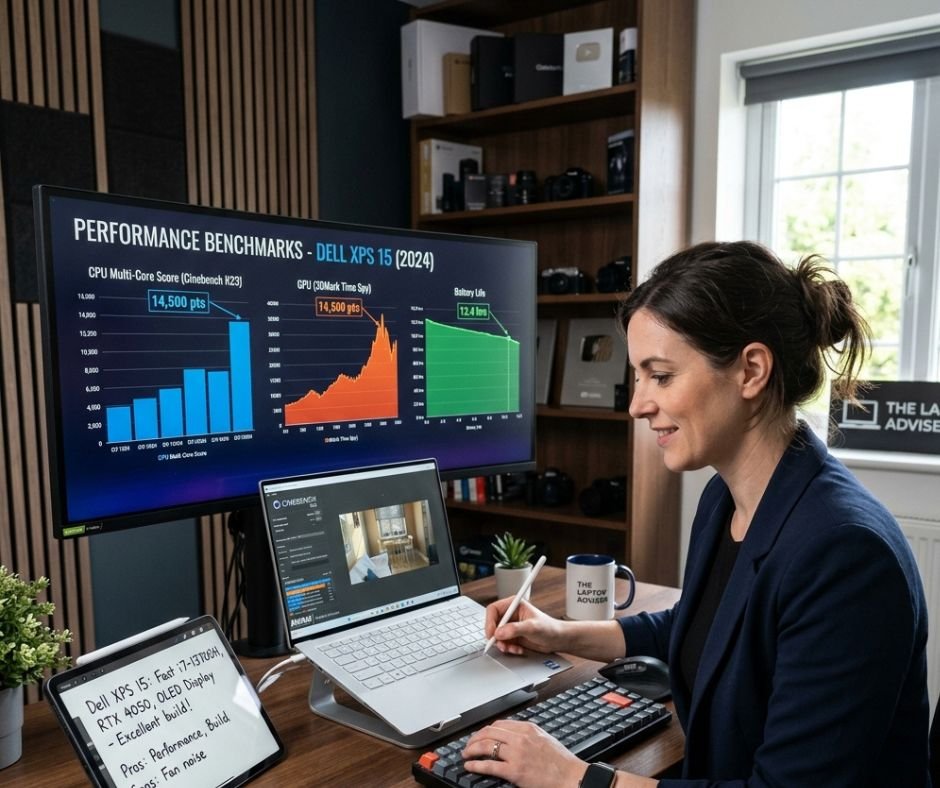

Choosing a laptop from a specification sheet alone can be surprisingly difficult. A processor name, GPU model, RAM capacity, or display resolution tells you what a machine contains, but not necessarily how it behaves during everyday work or extended gaming. That is why Expert Reviews TheLaptopAdviser can be useful when you are researching a laptop before spending money.
TheLaptopAdviser focuses on laptop reviews, comparisons, specifications, performance considerations, battery life, portability, and buying advice. Its published material describes hands-on evaluation, benchmarking, battery checks, and value analysis as parts of its review approach. However, readers should still examine the evidence behind individual claims and compare important findings with other reliable sources.
This guide explains what TheLaptopAdviser covers, how laptop testing should work, which factors matter most, and how you can turn review information into a practical buying decision.
What Is Expert Reviews TheLaptopAdviser and What Does It Cover?
Expert Reviews TheLaptopAdviser refers to laptop-focused review and buying information associated with TheLaptopAdviser. Its published content discusses different laptop categories and examines factors such as performance, battery life, displays, cooling, portability, specifications, and value. The central purpose is to help readers understand how a laptop may fit a particular workload.
A student may prioritize battery life and portability, while a gamer may care about GPU performance and cooling. A creator may focus on display quality, color accuracy, memory, storage, and sustained performance. Good expert laptop reviews therefore connect specifications with actual use instead of treating every laptop as a collection of numbers.
How Does TheLaptopAdviser Review and Test Laptops?
A useful laptop testing methodology should combine repeatable measurements with practical experience. TheLaptopAdviser describes hands-on testing, performance benchmarks, battery checks, portability considerations, and value analysis in its published review material.
Laptop benchmarks can reveal differences in CPU, GPU, memory, and storage performance. Yet benchmark results are only one part of the picture. A laptop may deliver a strong short score and then reduce clock speeds during a long workload because of heat or power limits.
Battery testing requires context. Web browsing, video playback, office applications, and gaming can produce very different results. Brightness, wireless activity, refresh rate, power profiles, background processes, and discrete GPU behavior can all change endurance.
Physical testing matters too. Display brightness, color coverage, keyboard comfort, trackpad accuracy, chassis temperature, hinge construction, speaker quality, webcam performance, ports, and fan noise can strongly influence everyday satisfaction.
What Do TheLaptopAdviser Expert Reviews Evaluate?

TheLaptopAdviser expert reviews connect hardware specifications with practical outcomes. CPU and GPU performance should match your workload. Office users may not need a powerful discrete GPU, while gamers and creators can benefit from stronger graphics hardware.
RAM capacity affects multitasking, and SSD performance influences application loading and file transfers. Upgradeability also deserves attention because some laptops use soldered RAM while others provide accessible memory slots.
A laptop’s display should be evaluated according to its purpose. An OLED panel can provide strong contrast and fast pixel response, while IPS displays remain common across productivity and gaming machines. Buyers should examine resolution, brightness, refresh rate, response time, color accuracy, and color coverage according to their needs.
Build quality matters as well. Aluminum, magnesium alloy, and reinforced plastic can provide different balances of weight, durability, cost, and rigidity. Software deserves similar attention because proprietary control centers, fan curves, power profiles, pre-installed applications, and bloatware can affect usability.
TheLaptopAdviser Gaming Laptop Reviews Explained
TheLaptopAdviser gaming reviews require a slightly different evaluation approach because gaming laptops combine high-performance components with significant power and thermal demands. Cooling capacity, processor choice, memory configuration, display resolution, and GPU power limits can all influence results.
Gaming laptop performance should therefore be examined through frame-rate tracking and sustained workloads rather than a single benchmark. Average FPS can be useful, but consistent frame delivery and performance after prolonged gaming can reveal more about the actual experience.
Cooling is especially important. Reviewers should consider CPU and GPU temperatures, keyboard and chassis temperatures, fan noise levels, air intake and exhaust, and thermal throttling. A powerful cooling solution may sustain higher performance, although it can also increase acoustic output or chassis size.
A gaming laptop screen may offer 120Hz, 144Hz, 165Hz, 240Hz, or higher refresh rates. Higher refresh rates can improve motion clarity when the GPU produces enough frames. Response time also matters because slow pixel transitions can create ghosting. OLED, IPS, and Mini-LED panels each offer different advantages involving contrast, brightness, response behavior, and power consumption.
Which Types of Laptops Can You Compare With TheLaptopAdviser?
The most useful laptop comparisons begin with intended use rather than brand loyalty. Budget laptops, business notebooks, portable systems, gaming machines, creator laptops, and premium models can all make sense for different buyers.
Students commonly prioritize affordability, battery life, portability, keyboard comfort, webcam quality, and sufficient everyday performance. Business users may place greater emphasis on security, connectivity, durability, keyboard quality, and reliable battery endurance.
Ultraportable laptops are designed around mobility. Their smaller chassis can make them easier to carry, but thin designs may provide less cooling capacity and fewer ports. Gaming and creator laptops generally accept greater weight in exchange for stronger CPU and GPU performance.
Premium and 2-in-1 systems add other considerations. Convertible hinges, touchscreens, speakers, materials, display quality, and chassis durability can influence their value. The right laptop depends on how its design and hardware match your priorities.
How Reliable and Transparent Are TheLaptopAdviser Reviews?

Review reliability depends on methodology, evidence, configuration details, transparency, and the ability to separate measured results from subjective impressions. TheLaptopAdviser describes practical testing and buying-focused evaluation in its published material, but readers should still examine the evidence supporting individual conclusions.
Commercial relationships also deserve attention. TheLaptopAdviser discusses affiliate links and states that these links do not influence its opinions. An affiliate relationship alone does not prove that a review is inaccurate or accurate. Instead, look for clear disclosure, consistent methodology, and evidence that allows you to assess the claims yourself.
User feedback provides another useful layer. Long-term owners may report BIOS problems, dead pixels, coil whine, battery degradation, driver issues, hinge problems, or other concerns that a short review period cannot reveal. Recurring complaints deserve more attention than isolated anecdotes.
TheLaptopAdviser Comparisons and Buying Guides: How to Use Them
A laptop buying guide becomes much more useful when you use it as a decision framework. Start by defining your budget and workload. Then compare laptops that actually serve similar purposes.
Do not compare only processor or GPU names. Check RAM, storage, display specifications, ports, wireless connectivity, battery capacity, upgradeability, cooling, and software. Gaming buyers should also examine GPU power limits, cooling, display refresh rate, and sustained performance.
Price-to-performance should include long-term ownership. Warranty coverage, upgrade options, repairability, and battery replacement considerations can also affect overall value.
| Factor | What to Check |
| CPU | Workload performance and efficiency |
| GPU | Gaming or creative performance |
| RAM | Capacity and upgradeability |
| Storage | Capacity, SSD speed, and upgrade options |
| Display | Resolution, brightness, color, and refresh rate |
| Battery | Testing conditions and real-world endurance |
| Cooling | Temperatures, throttling, and fan noise |
| Build | Materials, hinges, and portability |
| Ports | Compatibility with your accessories |
| Value | Price, warranty, and long-term usefulness |
TheLaptopAdviser in 2026: AI PCs, NPUs, Battery Life and New Trends
Laptop technology in 2026 continues to emphasize AI acceleration, efficient processors, high-refresh displays, OLED panels, improved graphics, and better power management. Newer laptop designs increasingly include neural processing units, or NPUs, for selected AI workloads.
An NPU can accelerate compatible local AI tasks while potentially using less power than relying entirely on general-purpose processing. However, its importance depends on your software. If gaming is your primary workload, GPU performance remains central. If you regularly use supported AI applications, NPU capability may become more valuable.
Modern gaming laptops also continue to balance powerful GPUs with cooling systems, high-refresh displays, and portable form factors. Buyers should look at the complete configuration rather than assuming that a newer generation automatically delivers a proportional improvement.
OLED can provide deep blacks and rapid response, while Mini-LED can deliver strong brightness and HDR performance. IPS remains a versatile choice for many buyers. Battery efficiency is equally important because power profiles, background activity, display settings, and discrete GPU behavior can significantly affect runtime.
Common Laptop Buying Mistakes and Review Limitations to Avoid
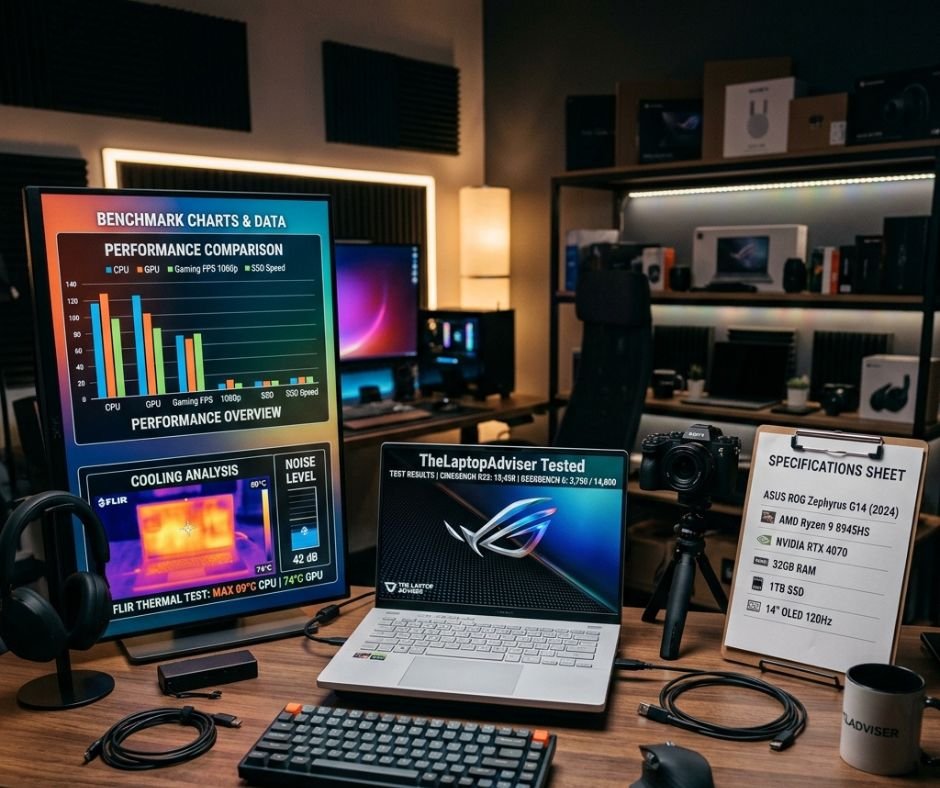
One common mistake is choosing a laptop based entirely on CPU or GPU branding. The same component can behave differently across machines because manufacturers use different power limits, cooling systems, firmware, memory configurations, and performance profiles.
Another mistake is ignoring sustained performance. Short benchmarks may not reveal what happens after the system becomes hot. Look for information about thermal throttling, temperatures, fan noise, and prolonged workloads before buying a performance-focused laptop.
Buyers also overlook ports and upgradeability. Check USB connections, video output, charging, audio, memory configuration, SSD access, and wireless support.
Avoid trusting one review without cross-checking. Professional reviews provide controlled observations, while independent user feedback can expose long-term issues. Combining both perspectives gives you a broader understanding of the product.
How to Use Expert Reviews TheLaptopAdviser Before Buying a Laptop
Begin by writing down your budget, primary workload, preferred screen size, portability needs, and essential features.
Next, shortlist suitable laptop categories. Compare performance, battery life, display quality, cooling, memory, storage, ports, software, and build quality. For gaming models, add GPU power limits, refresh rate, response time, and sustained FPS to your checklist.
Then cross-check important findings with other independent laptop reviews and current user feedback. Pay particular attention to recurring issues involving thermals, displays, drivers, batteries, hinges, or software. Finally, verify the exact configuration, current price, warranty, return policy, and regional availability before ordering it now today.
Frequently Asked Questions
Is TheLaptopAdviser useful for laptop research?
It can be useful as one source of laptop-focused information covering specifications, performance, comparisons, and buying considerations.
How should you evaluate a laptop review?
Check the tested configuration, methodology, benchmarks, battery conditions, display measurements, thermal results, and stated limitations.
Are gaming laptop reviews different from normal laptop reviews?
Yes. Gaming reviews usually emphasize GPU performance, sustained FPS, cooling, power limits, display refresh rate, response time, and acoustics.
Are laptop benchmarks enough to choose a laptop?
No. Benchmarks help compare performance, but they do not fully describe battery life, keyboard comfort, display quality, portability, software, or durability.
Is an OLED gaming laptop always better than IPS?
No. OLED offers excellent contrast and response characteristics, while IPS can provide a different balance of brightness, cost, battery behavior, and durability.
Final Advice
The most useful laptop review answers one practical question: how well will this machine serve your specific needs?
Expert Reviews TheLaptopAdviser can help you investigate specifications, performance, gaming capabilities, battery behavior, displays, portability, and buying considerations. However, the strongest purchasing process goes further. Combine review evidence with independent testing, user feedback, current pricing, warranty information, and your own workload.
For gaming laptops, examine GPU power, cooling, sustained FPS, display response, and portability. For productivity machines, prioritize battery endurance, keyboard quality, display comfort, connectivity, and efficient performance.
Most importantly, do not let one benchmark or rating make the decision for you. Use TheLaptopAdviser as one research source within a broader comparison process. When the tested performance, features, price, and long-term considerations match your requirements, you can make a much more informed laptop purchase.

Welcome to GamVexio! I’m Habib, a dedicated content writer with 1 year of experience in SEO, digital content, and website growth. I specialize in creating engaging, reader-friendly, and search-optimized content that helps websites reach a wider audience and strengthen their online presence.